Straight up, this game is a “choose your own adventure” in boardgame format, which makes it perfect for this website: a narrative-driven adventure game that I didn’t even know existed until a month or two ago, and somehow managed to get my hands on a copy!
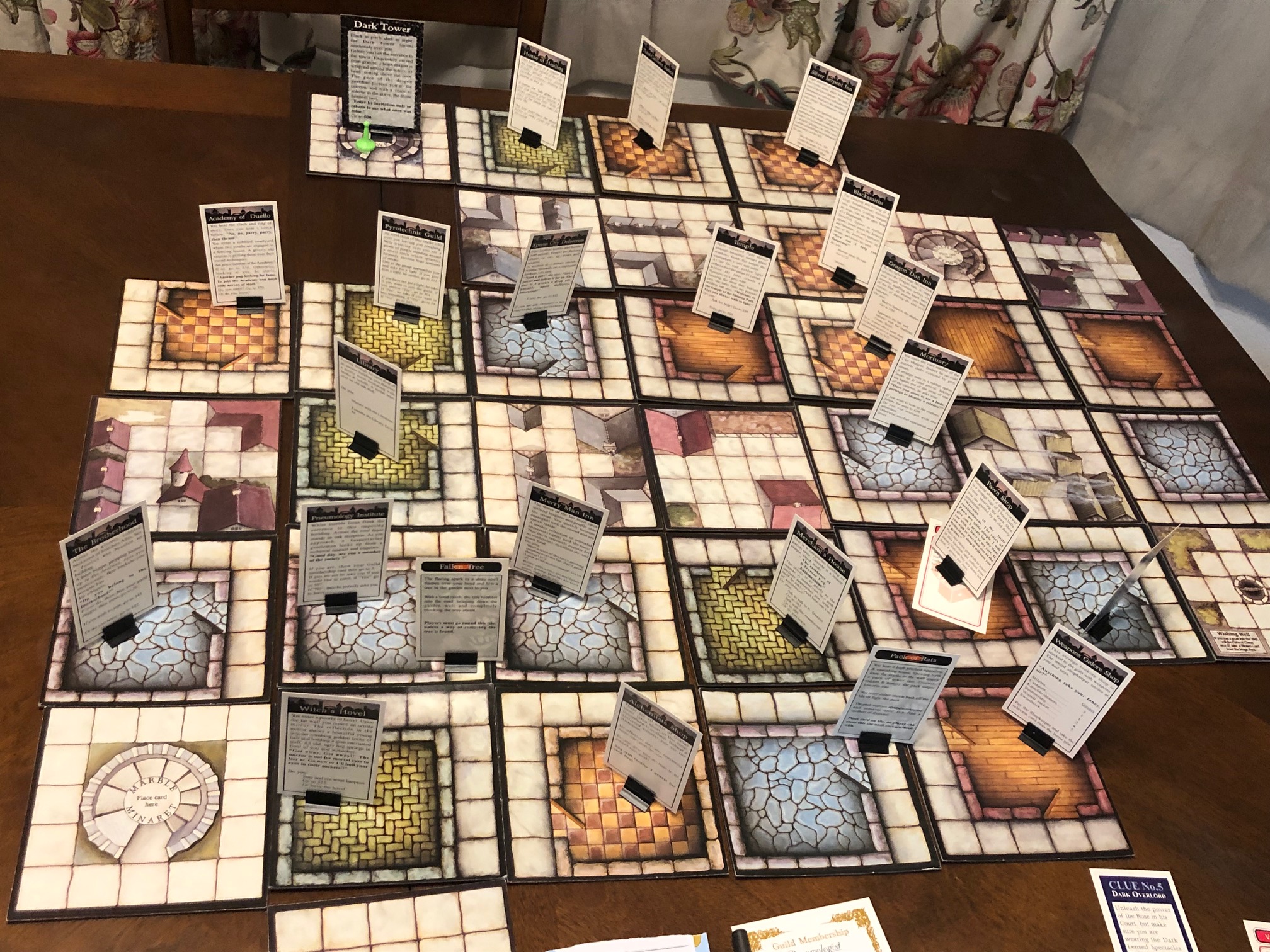
The city of Byronitar has fallen ill: a nameless curse is bleeding through its streets, corrupting the city one block at a time. You, the player, are a generic no-talent schmoe who has been summoned to identify the cause of the city’s blight and remove it…assuming you don’t die a horrible, embarrassing death. Or make the city even worse than you found it. Wait, why are you stealing that old man’s walking stick?! Give that back! What kind of hero are you?!
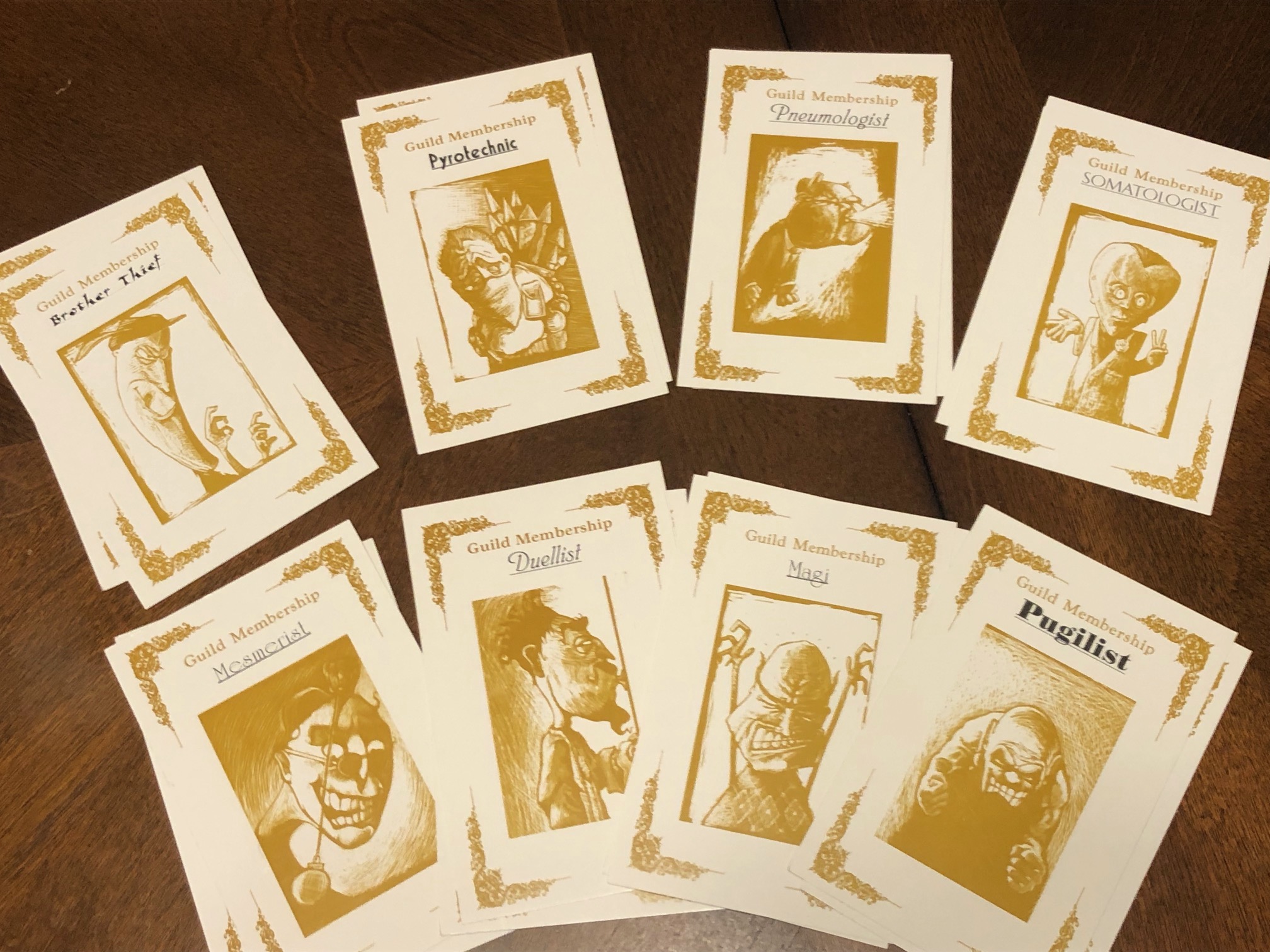
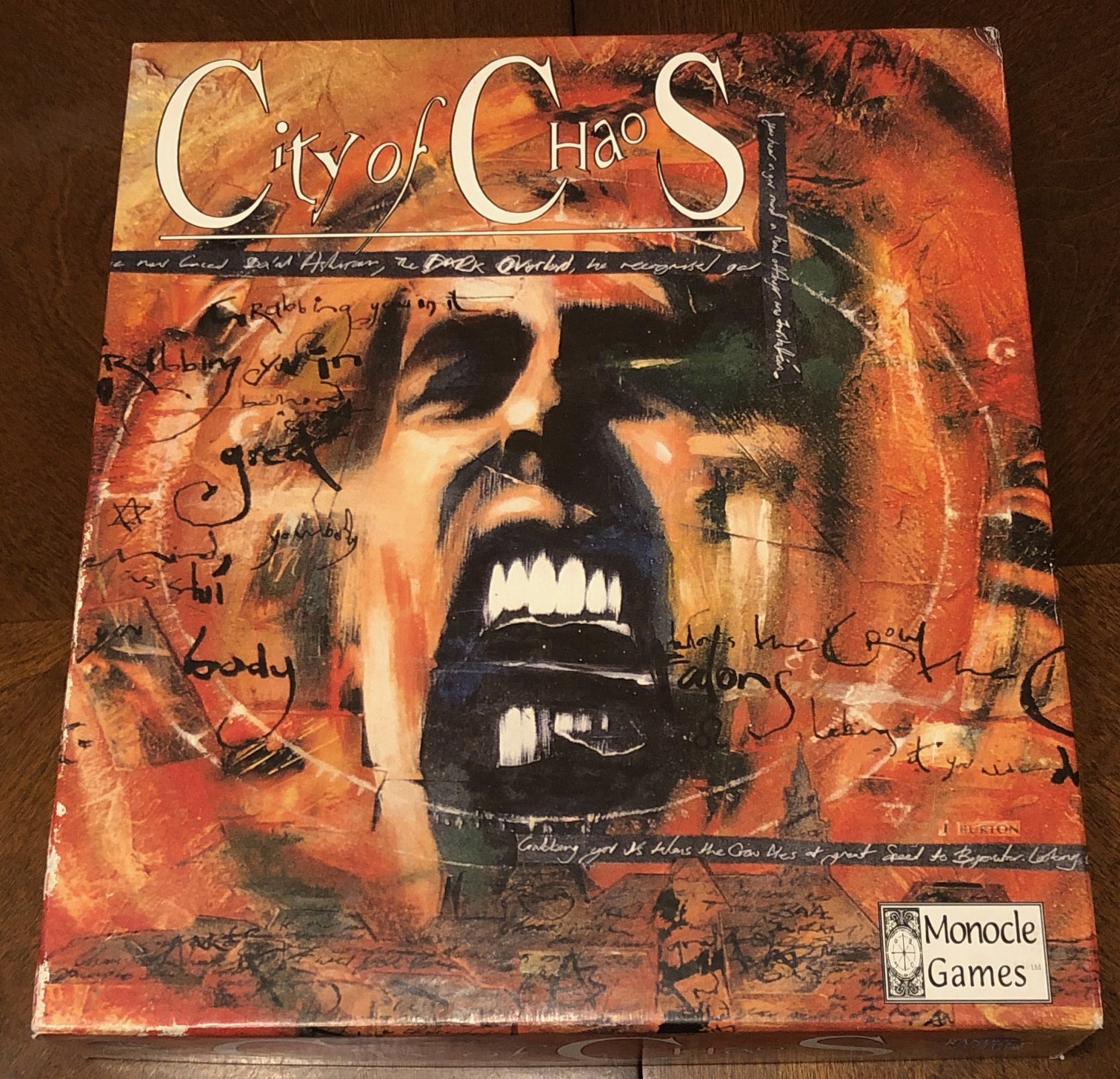
City of Chaos is obscure for a reason: it’s an indie project from way back in 1996, never formally published or widely distributed. It’s a labor of love, evidenced by the mismatched art and poor proofreading. The caricatures on the guild memberships are twisted and surreal nightmares that would make Tim Burton green with envy, claishing with the bog-generic city tiles and the shoddy clipart fonts for the cards.
But it has its charm because of the makeshift presentation, and the character designs (and that amazingly disturbing box) more than make up for it. So does the quirky if macabre writing of the game’s story.
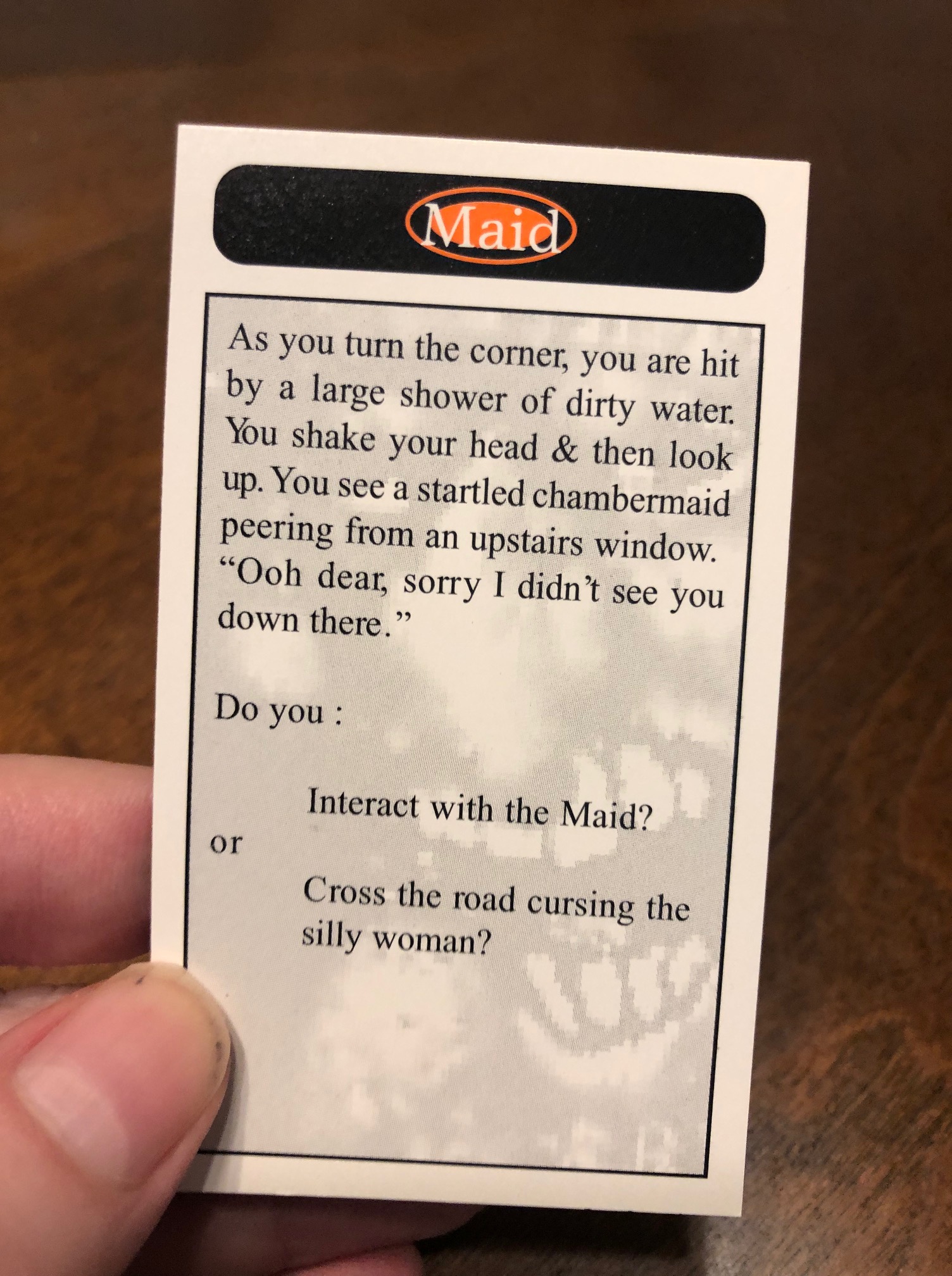
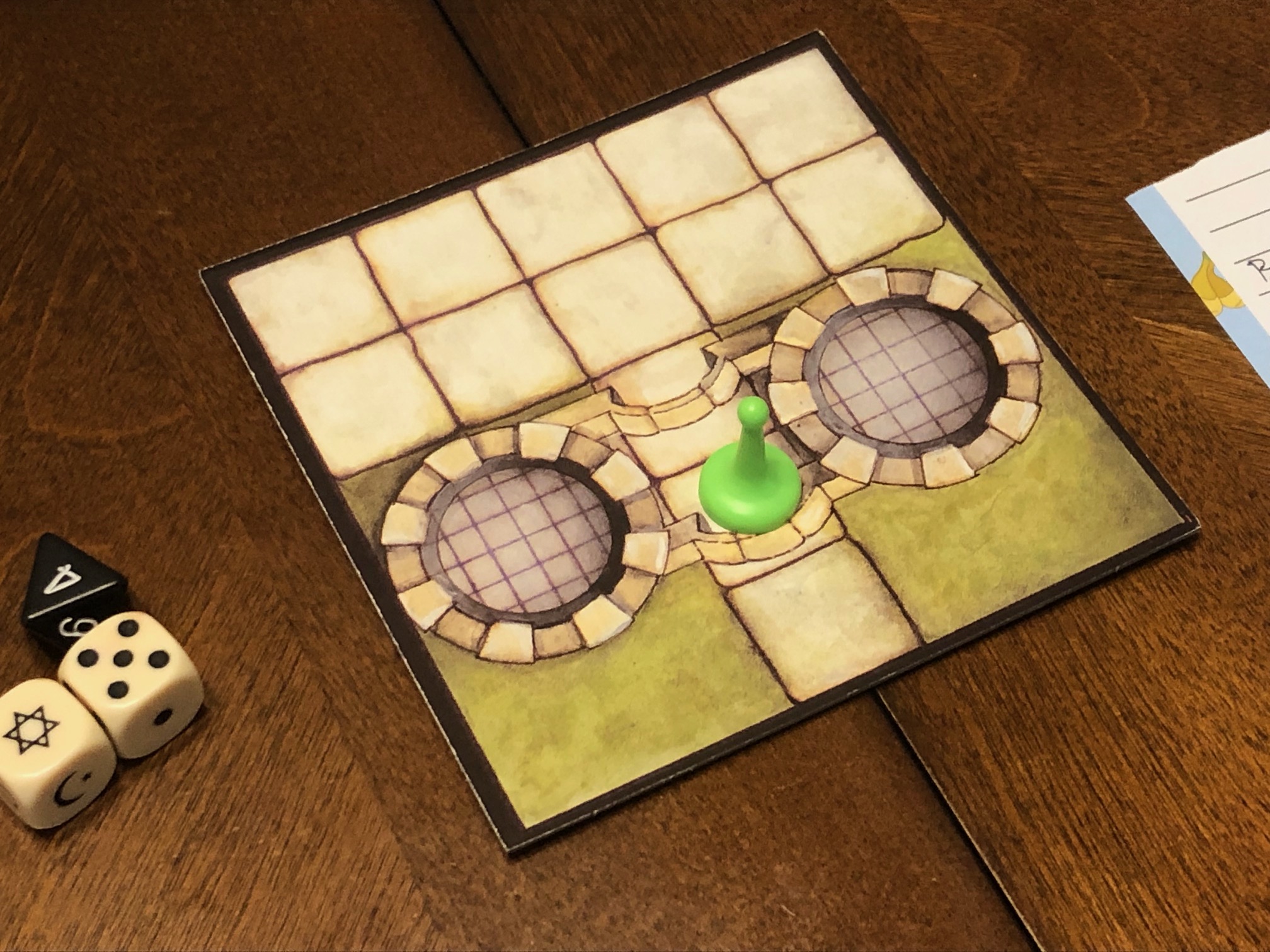
That’s where the spotlight shines, too: the story being told as you explore the modular city. The gameplay itself is simple enough. Roll the D8 and move, placing a new city tile if you step off of your current one. If you end on a street space, draw and resolve an Action card. If you end in a location (an empty room), draw a Location card and place it in that room so anyone can interact with it. If you get into a fight, use the combat cards to resolve each round until one of you is dead. But it’s the story that really steals the show, in the form of the Tome of Chaos, a thick orange book filled with passages that bring Byronitar to life.
There are scores of colorful characters you’ll meet in Byronitar, all listed in the Tome, and you don’t always have to beat them senseless and loot their corpses (as fun as that is). You often get the chance to “interact” by way of greeting, asking/offering help, and/or threatening them, with different results decided by a roll of the Chaos Die.
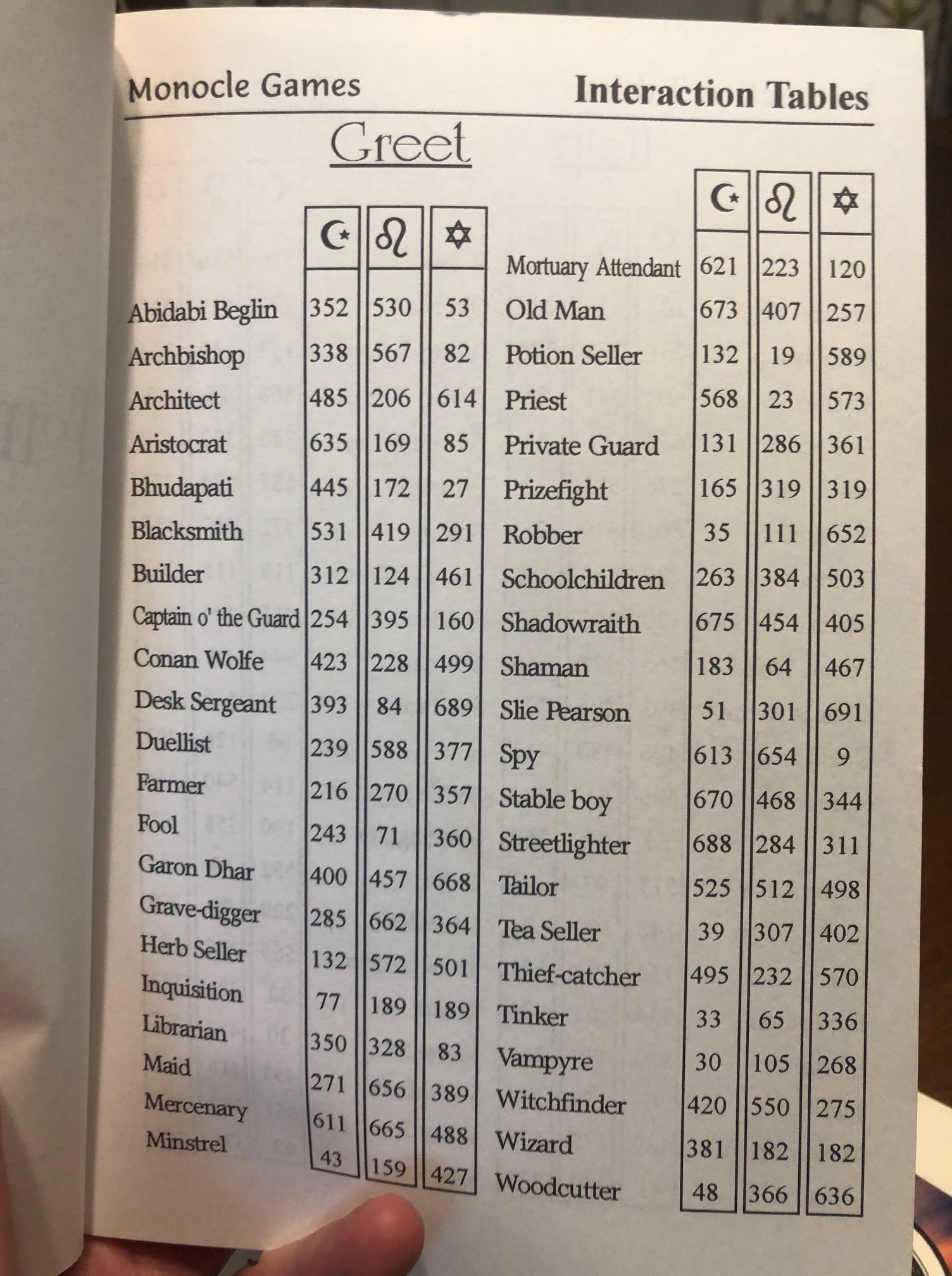
So you might bump into the Captain o’ the Guard and strike up a conversation with him, and maybe he decides to leave you alone, or even give you a hint about one of the many curses plaguing the city. Or maybe your actions from a previous encounter flagged you as a criminal, and he outright arrests you. Or maybe you use your stealth skills as a member of the Brotherhood of Thieves to avoid encountering him altogether.
That brings me to the guilds you join during your stay in the city. They’re a selective lot, and generally joining one means you’ll be barred from several others, but all of them give you special skills and/or equipment and the chance to level up over time, as you gather clues and prepare to bring an end to the city’s curse(s). You can join the Pyrotechnic guild and build fireworks for use in combat (or avoiding combat). You can be a Duellist and kill stuff real good. You can be a Pneumologist and turn the very breath in your body into a weapon. You can be a Somatologist and follow the path of healing and nonviolence, reasoning with your enemies rather than starting punching contests. All of the guilds provide things that affect your adventure in a meaningful way, and I was surprised how much my membership was connected to the story as it developed.
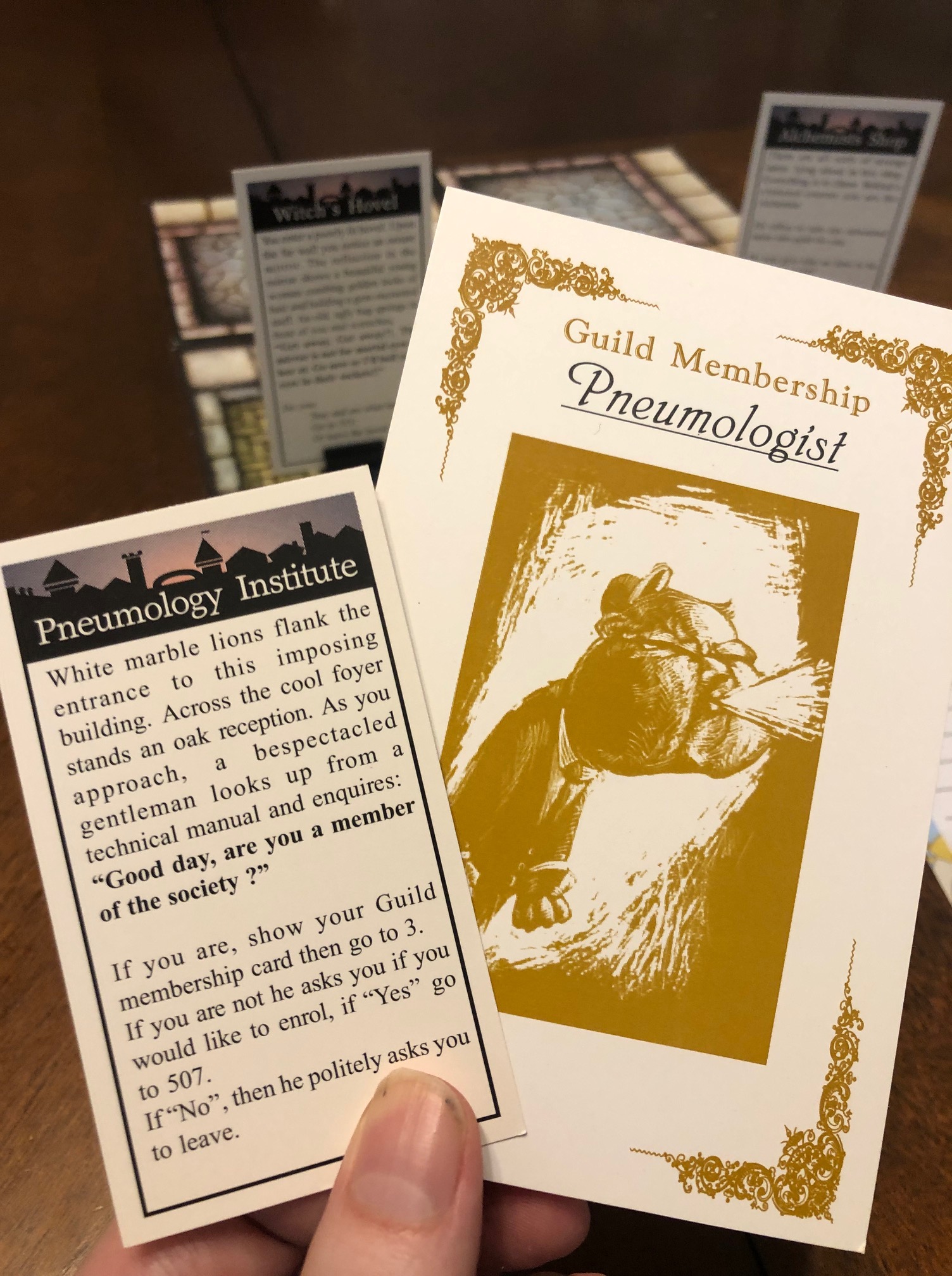
The playing pieces are excellent likenesses of the guild representatives, but they don’t work that well as playing pieces in my opinion, even when painted. I use colored pawns to make it easier for players to identify their character, and they better represent our heroes anyway: when we enter the city, we have no special traits or personality. That develops as a result of our stay in the corrupted city…and whether it brings out the best in us, or the worst.
It will take a few hours to complete a game, to be sure. I got to the end during a solo test in about two hours and change, maybe more; with other players taking their own turns, that will make the game exponentially longer. But the game really does come to life as you play it, and it might make the long play time worth it.
And there’s nothing stopping you from house ruling the game to speed it up. I like to allow 2 move rolls, and let the player pick which one to use, and I do away with the “exact count” nonsense when landing in locations. The game takes long enough without mechanics like that.
The bad news is, this game is rare and expensive. The good news is, there’s a revised edition in the works! The bad news is, there’s probably no telling when (or if) it will come out. The good news is, the art style will be more consistent and less slipshod than the original. The bad news is, it’s as generic as can be, and nowhere near the level of surreal nightmare fuel the original manages to convey.
Here’s a comparison of the Somatologist from the original game (left) vs the revised edition (right):
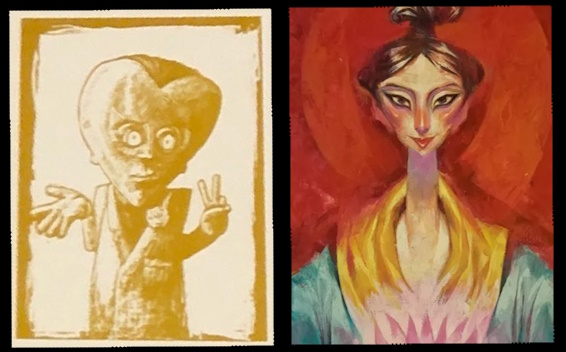
The new one looks nice, but it also looks like literally any game on the market right now. It doesn’t stand out like that mild-mannered hydrocephalus weirdo on the left, and I wish game designers would care less about “diversity” and more about “artistic integrity” or “literally anything memorable.”
If you love the idea of an immersive adventure with a focus on narrative, this is the game for you. Hopefully the new edition will come out soon so more people can play this masterpiece of game design, virtue signaling design quotas notwithstanding.
Time for bed. Uncle Mac out.