If you hug the mouse, turn to 137.
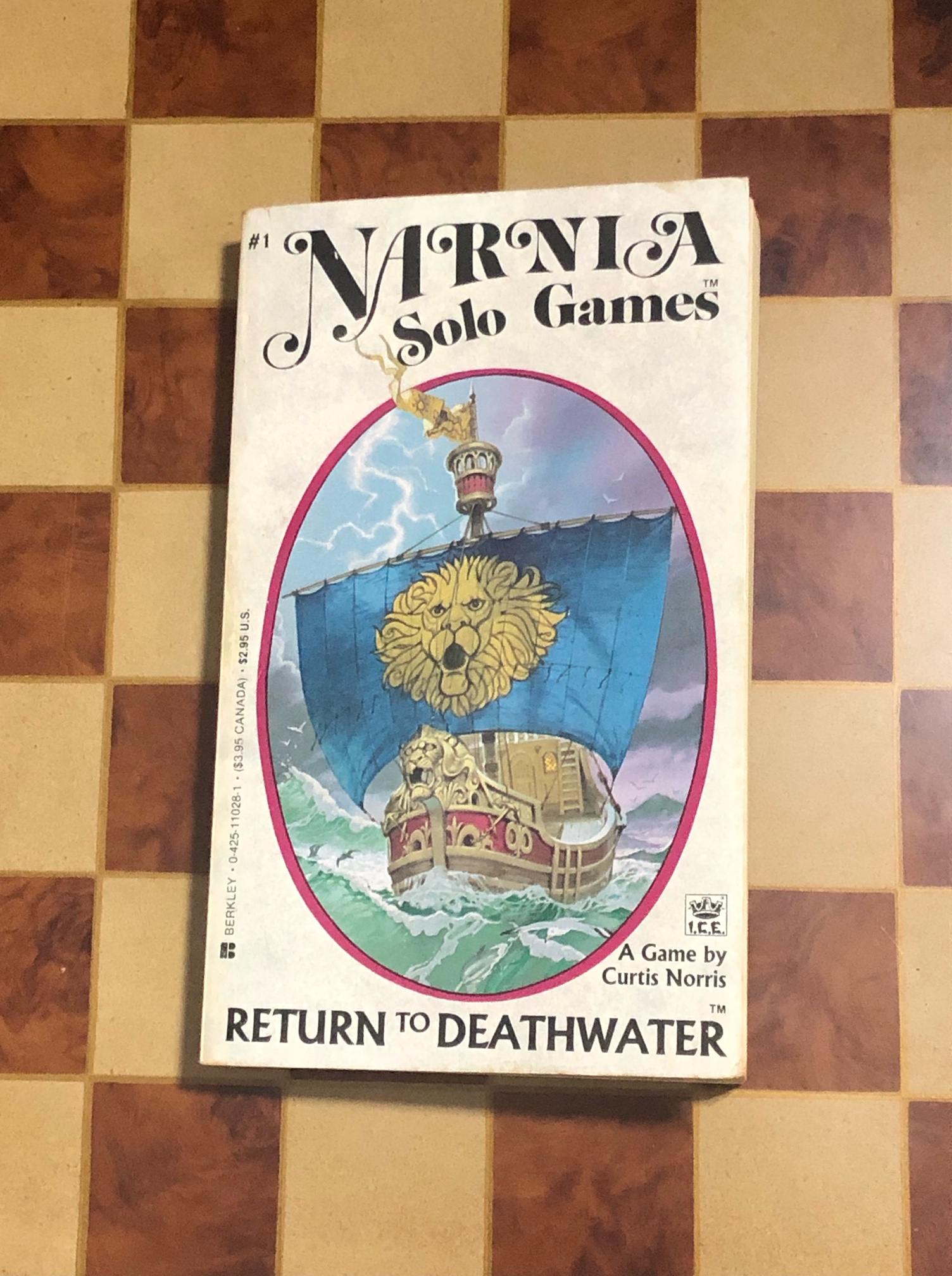
I never read C. S. Lewis’s Narnia books as a kid. My only exposure to them was watching an animated film from the 70s or 80s in elementary school. So it’s odd that my first real exposure to the franchise is a gamebook written by a different author entirely. The author of this first volume is a guy named Curtis Norris, no relation to Chuck Norris.
This series of gamebooks began in 1988, but sadly it was cut short at only five volumes. I managed to get a spiffy four-pack with a fancy book sleeve to fit them all in. Granted, getting them to fit into that box is like cramming a 300 pound woman into a medium bathing suit, owing to a bit of water damage that probably occurred circa 1990.
Return to Deathwater puts us in the role of some random kid who is absolutely delighted every time he gets to take a school trip to the Natural History Museum of Nowheresville, USA. This kind of kid is known in some circles as a “square.”
During a less delightful chapter of the museum tour, we walk through an alcove that we had never noticed before in all our previous visits, and find ourselves in Narnia, eavesdropping on King Favian’s court as they stress over a mysterious poem heard in the King’s dreams. The poem relates to an island called Deathwater, where one of the Seven Lords went and disappeared. The King can’t sleep without knowing what happened to this lord and how the island got its name, and who better to investigate a cursed island full of death and mystery than a ten-year-old kid? Who, I ask you?!
For real, though. It’ll be fine. Sending emotionally unstable pre-teens into battle always works in anime. Why wouldn’t it work here?
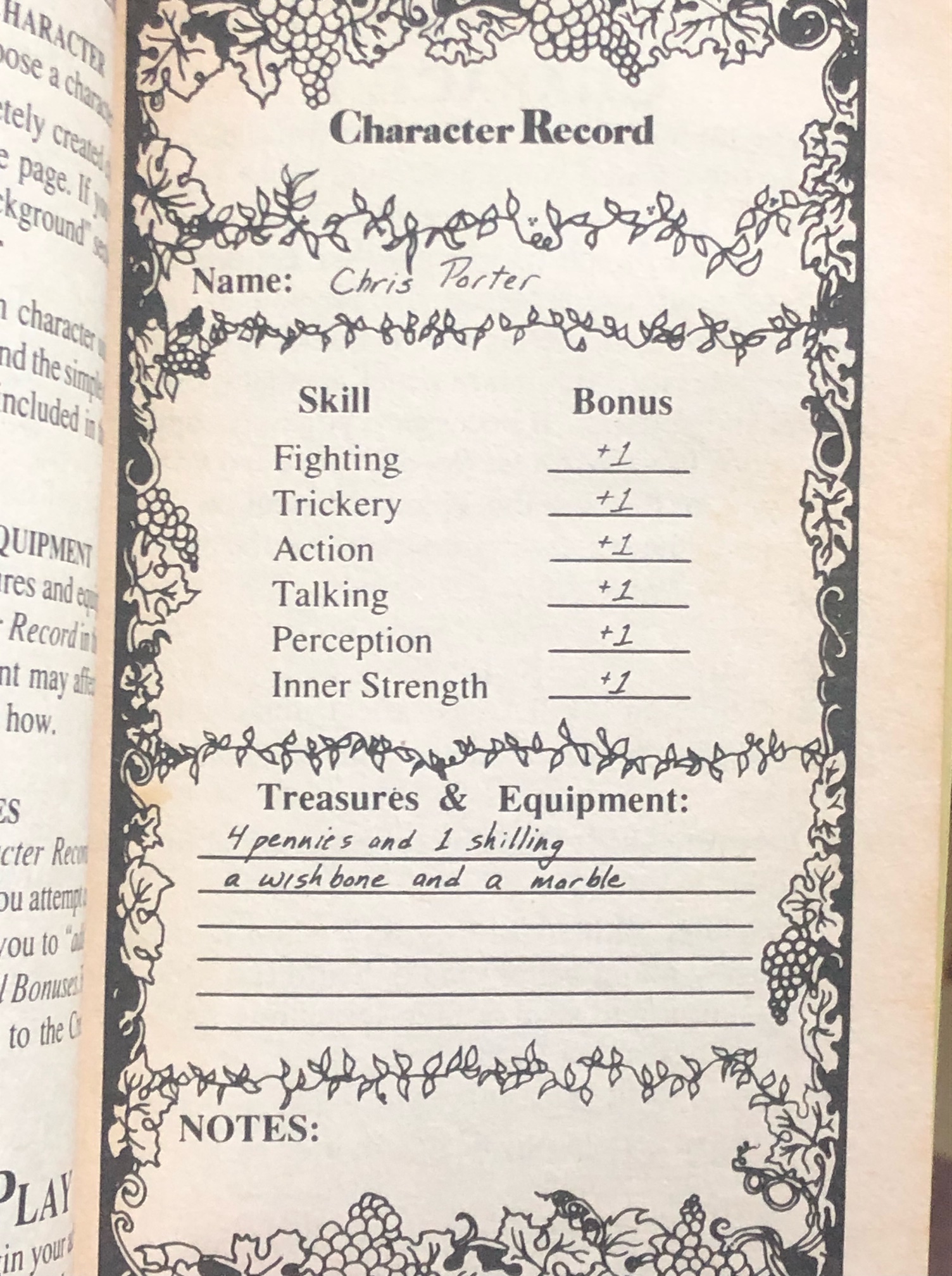
Return to Deathwater is an interesting take on the Fighting Fantasy style of gamebook. You got your character sheet, you got your character stats, you got your inventory, and you got your random numbers for deciding things. The book is also divided into paragraph sections rather than proper chapters: 350 sections in fact, across I-don’t-know-how-many pages because the pages aren’t numbered and I have a life outside of this website.
You don’t get into fights like in similar gamebooks, though. There’s no dice rolling to determine an outcome. Sometimes you pick a random number, either from the chart in the back of the book, or by flipping to a random page and using whatever number is at the bottom (anywhere from 1 to 12). Typically you add one of your skills to this number and then turn to the section indicated based on your total. You don’t even have to go to the trouble of creating a new character if you don’t want to: there’s a pre-made dude in the front of the book for those of you who want to jump right in.
That’s what I really liked about Deathwater. Minimal setup required, and the story doesn’t end abruptly because of a bad die roll. It’s like Fighting Fantasy: Quick Start Edition. Because of this, I was able to enjoy the structure of a meatier adventure without being bogged down by unpolished mechanics.
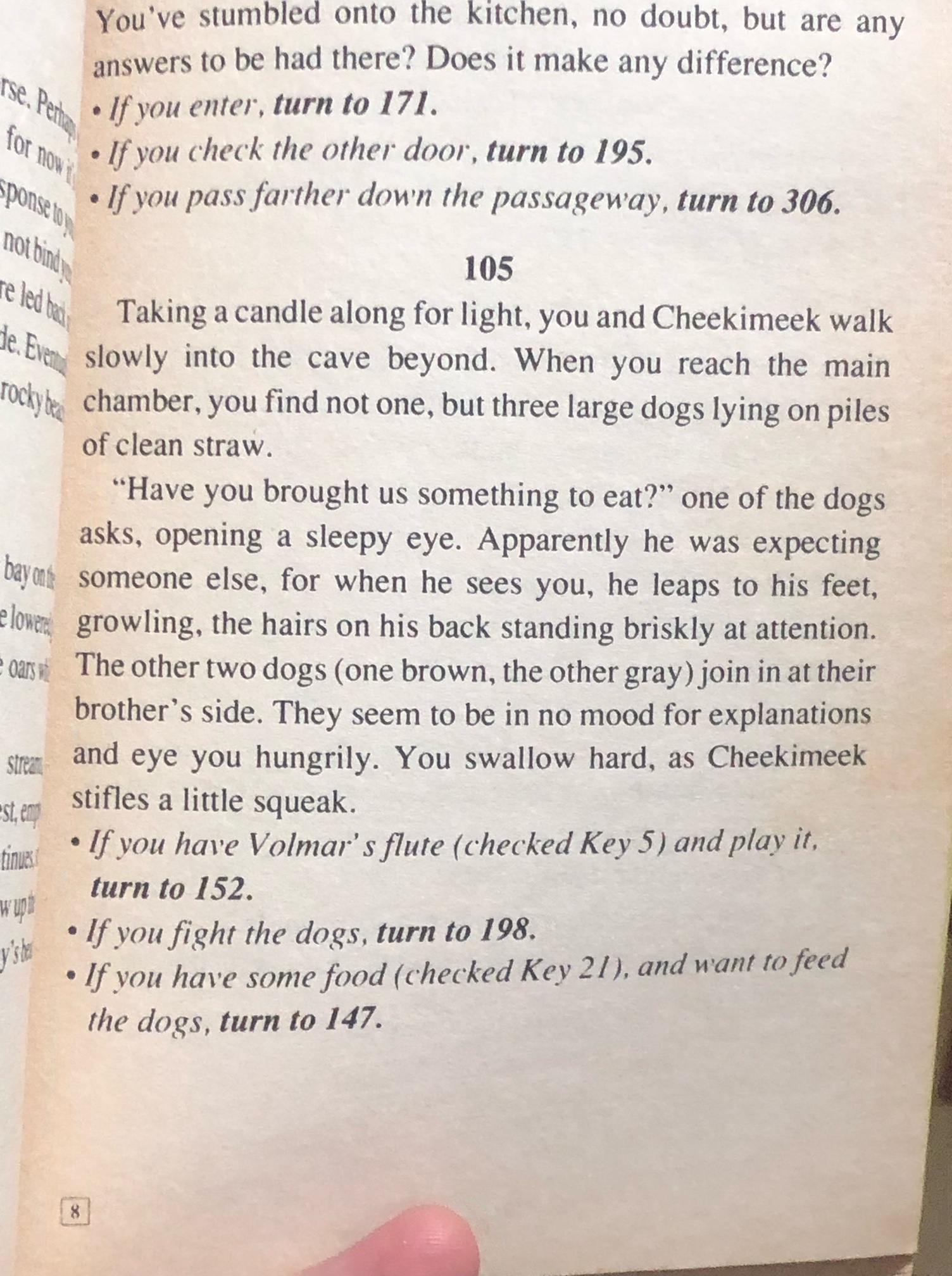
The story itself has a lot of opportunities for adventure, as well as making a chump of yourself. Making a wrong choice doesn’t always mean death, but it can absolutely end with a case of foot-in-mouth, and you’ll pay for it later. Deathwater is about character rather than body count, and while you may not get many opportunities to die (though you can, and horribly at that), you do get plenty of chances to mess up your quest and look like a jerk while doing it.
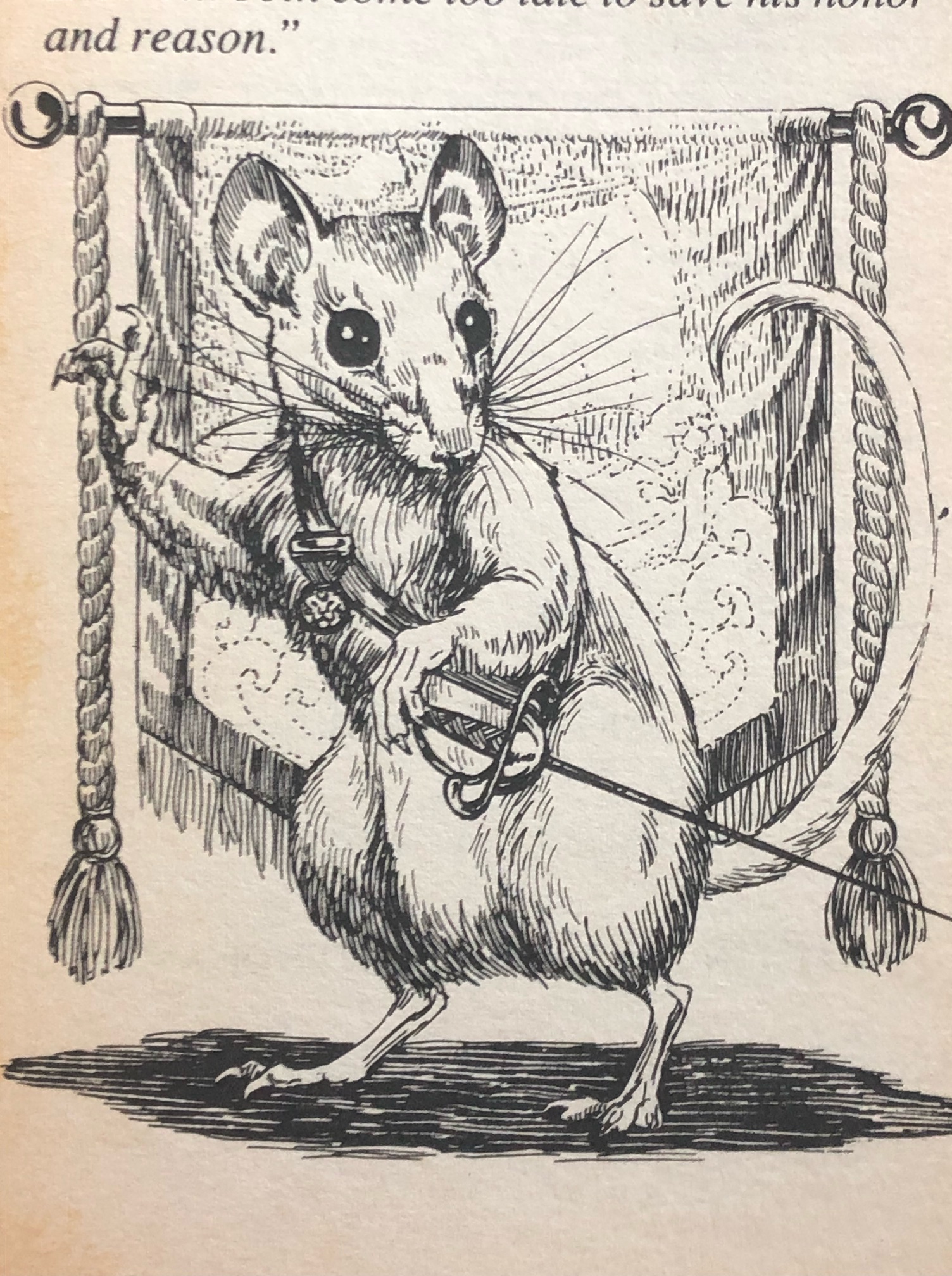
That said, when given the opportunity to bow to a knightly mouse or hug him like a teddy bear, I chose the latter without thinking twice, squealing like a cheerleader as I did so. No regrets.
Your key choices are tracked by “keys” that you check off as you progress. These aren’t tangible items exactly, but more like records of your actions that you may benefit from (or pay for) later in the narrative when it asks you if you have Key 15 or whatever. It does sometimes make the inventory system superfluous though, and there are times when the story simply expects you to remember whether or not you have a golden finger.
The King expects you to learn and accomplish several things in the course of your quest, and you can rate how well you did based on whether you bothered finding out what happened to what’s-his-name, or whether you learned the secret of Deathwater without getting yourself deathwater’ed in the process, and whether you helped certain parties for virtue’s sake or simply did the bare minimum and skedaddled while singing, “Good enough for government work!” If you botched the job, you can go back and try again, maybe as a new kid with a stupider name and more useless skill levels.
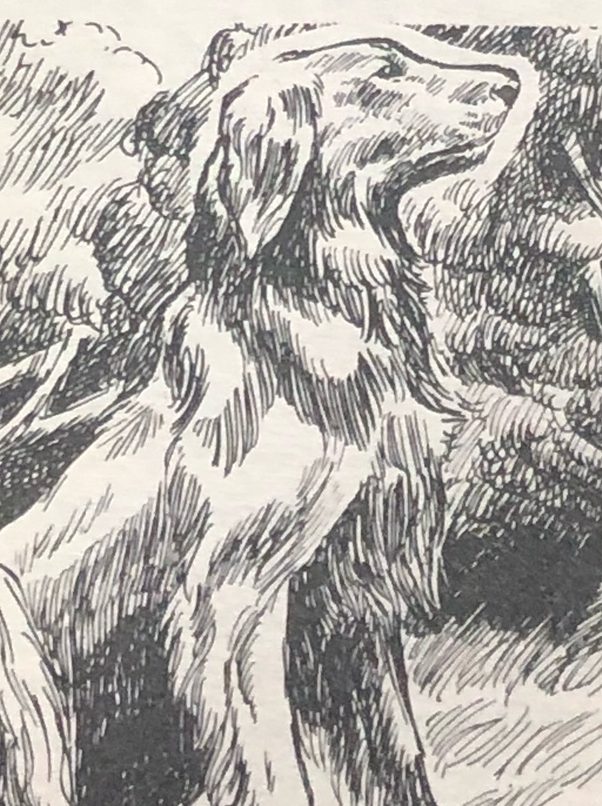
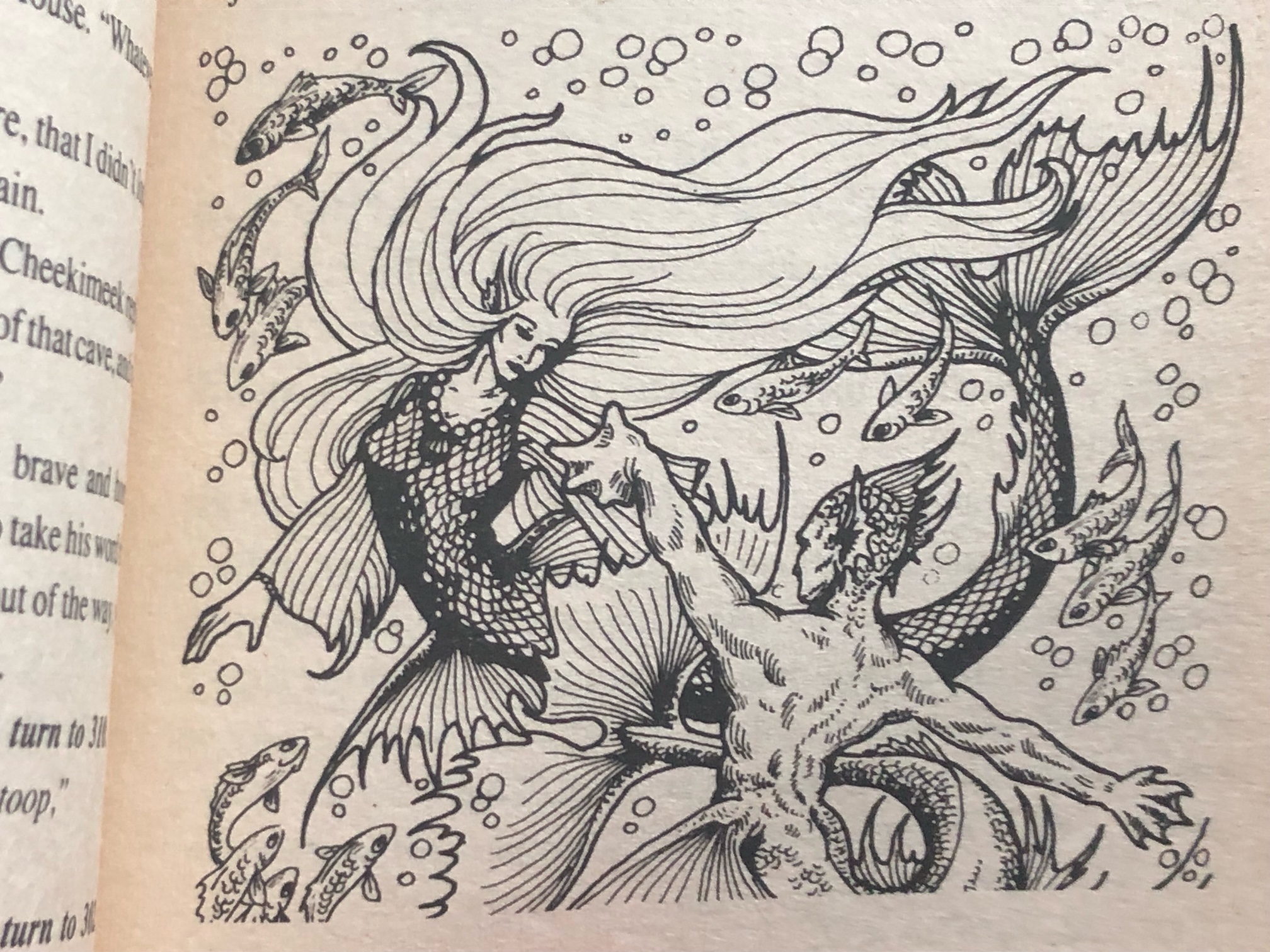
It goes without saying that the artwork is fantastic. Most of the art is window dressing to freshen the high fantasy vibe, but there are a few unique illustrations as well. Look at this magnificent pooch. Be dazzled by that stately mouse-knight on the first page, and also try not to hug him, for he is a proud warrior and he does not suffer cuddles lightly.
His name is Cheekimeek, though, and cuddle him I shall. Cheekimeek is the goodest boi.
I highly recommend this one for fans of gamebooks and fans of Narnia. It’s a charming little adventure that gets a lot of mileage out of its page count, although if you’re looking for something gritty with lots of battles and lethal dead-ends, it may be a bit too tame for your tastes.
Time for bed. Uncle Mac out.