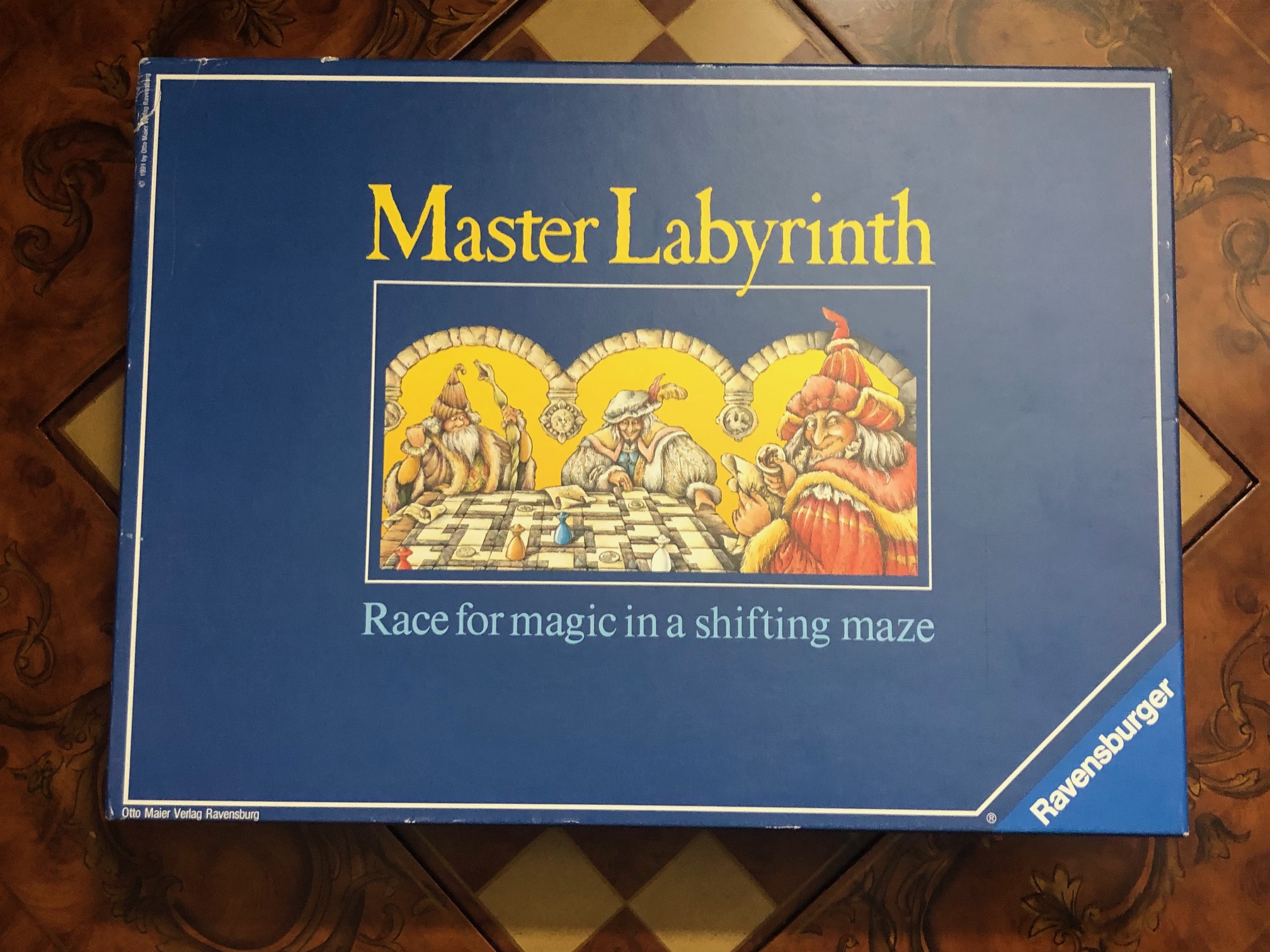
Labyrinth is a board game designed by Max J. Kobbert way back in 1986 (when I was but a wee lad). The central mechanic of the game is a magic maze that changes shape every turn, forcing the players to constantly think several moves ahead…and to think ahead not only of their opponent, but of themselves as well. In this game, if you aren’t paying attention, sometimes you are your own worst enemy.
Master Labyrinth, however, is the superior version for several reasons. It doesn’t actually add many new things to the base game, but those changes, though few in number, make a HUGE difference as far as strategy and replayability.
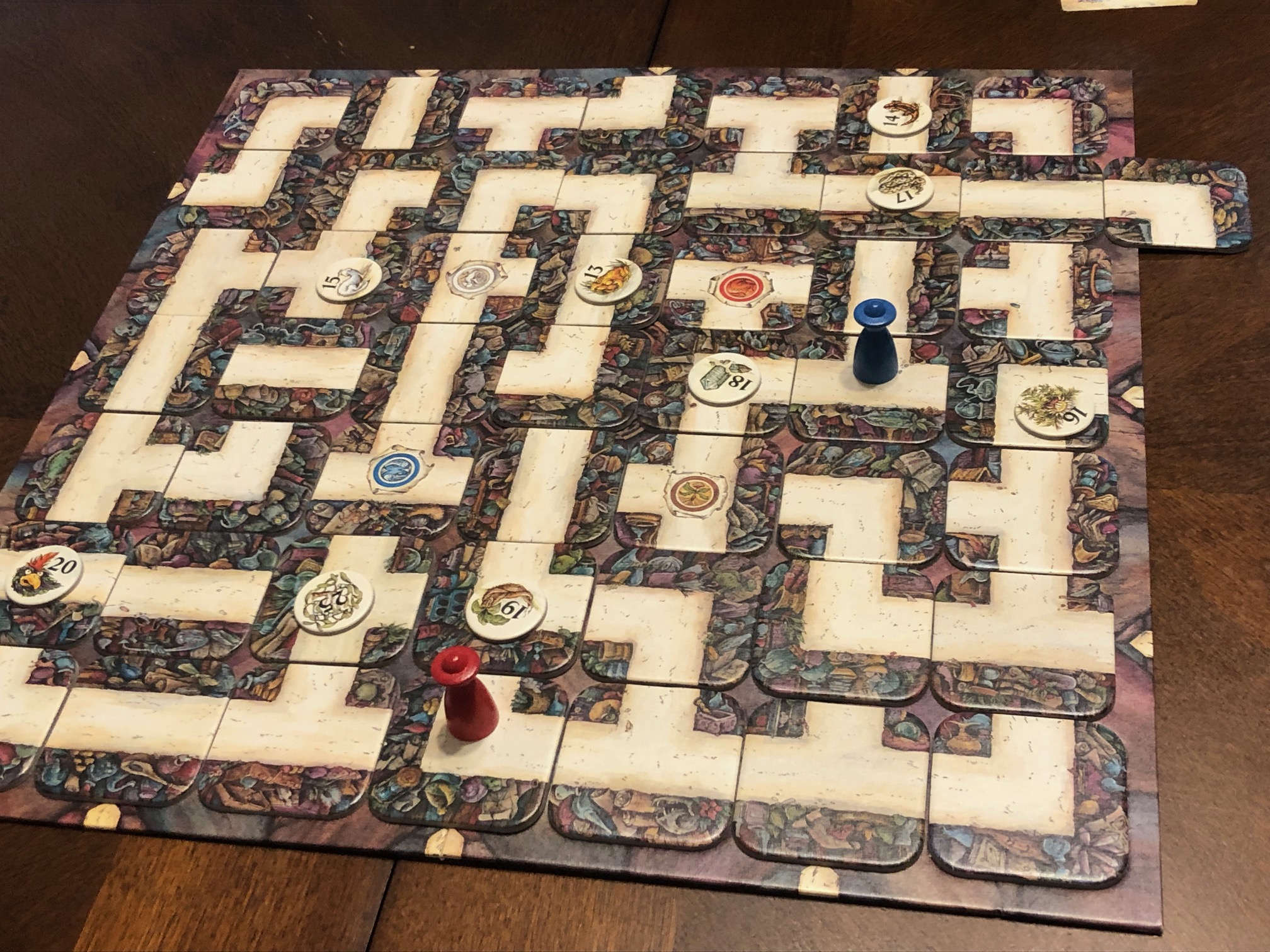
Your goal in Master Labyrinth is the same as the original: bumble around an ever-shifting maze while collecting spell components such as geckos and mandrakes and mistletoe and worms–all the things a growing wizard needs! The board consists of movable tiles (and a few that are permanently fastened to the board, to keep the movable ones in alignment) that can push and shift each other a full row at a time.
On your turn, you shift the maze by 1 tile, then move, then collect a component if you can reach it. You don’t move a space at a time: you can move as far as you want, as long as your paths connect. And you don’t have to move at all if you don’t want to. And sometimes you don’t get a choice about moving because you’re boxed in on your tile because your opponent is a backstabbing savage, and now you’re spending your turn trying to shift yourself into a better position while the other wizard is skipping around, gleefully grabbing all the goods. But I digress.
The first major difference with Master Labyrinth is the collecting of the spell components. In the original Labyrinth, each wizard has a set of component cards that the other wizards don’t know about, and you can only collect the topmost item in your deck. Once you get it, you place the card faceup to show you have it, then move on to the next item…which may be on the opposite side of the maze.
The problem with this is, you’re really playing against yourself more than the other wizards. Your opponents can’t really shift the maze deliberately to prevent you from getting your next item, because they have no idea what your next item is. They don’t even know what their OWN next item is! So all they can really do is trap you to delay you…which may not even work very well if they trap you near your next item anyway.
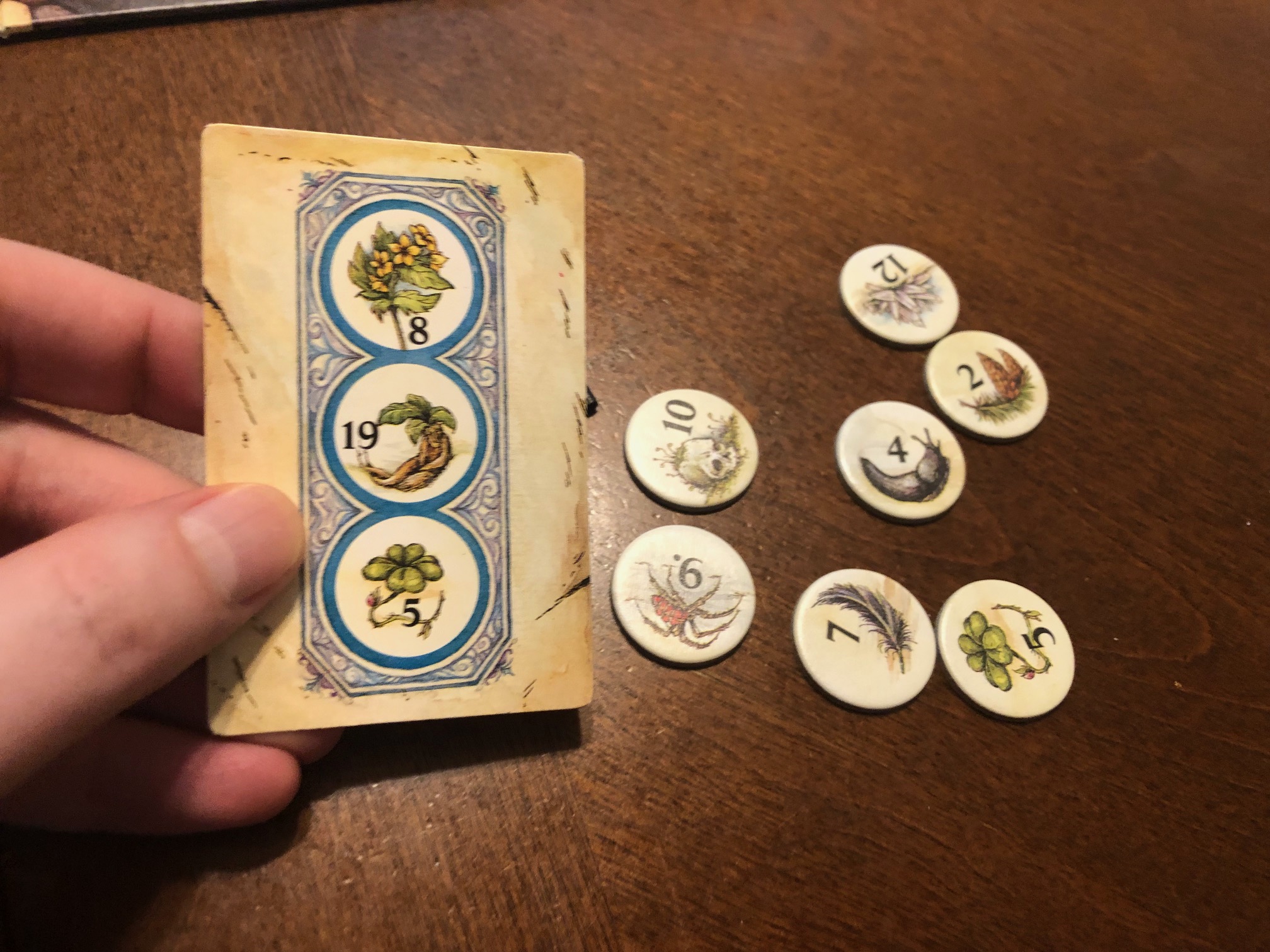
In Master Labyrinth, the spell components are tokens placed directly into the maze, and the wizards must collect them all in chronological order: so somebody has to grab Item #1 before anyone can grab Item #2, etc. And everyone can see where the next component is, so there’s no mystery about who’s after what, which means you can make much more deliberate choices in shifting the maze and shafting your opponents.
There are two other caveats that make the Master edition much more interesting. First, every wizard gets a secret spell formula card the other wizards don’t get to see until the end, each with a combination of 3 random spell components on it. Each component you possess at the end of the game is worth its designated number in points; but each one that is part of your formula is also worth an additional 20 points!
You also get 3 magic wands that can be used once per turn. Using a magic wand gives you an extra turn immediately (no cheating the magic, though: that doesn’t mean you can use another wand). The strategic value of the wands is precious, and unused wands aren’t worth a whole lot at the final tally, so you may as well use them.
Master Labyrinth is a definite improvement over the original, with more opportunities for strategic planning compared to the mad scramble of the original game. The original isn’t bad, but this one is certainly better, and if you can get a copy, conjure it into your game nights posthaste.
Time for bed. Uncle Mac out.
 Uncle Mac's Gamebook Shack