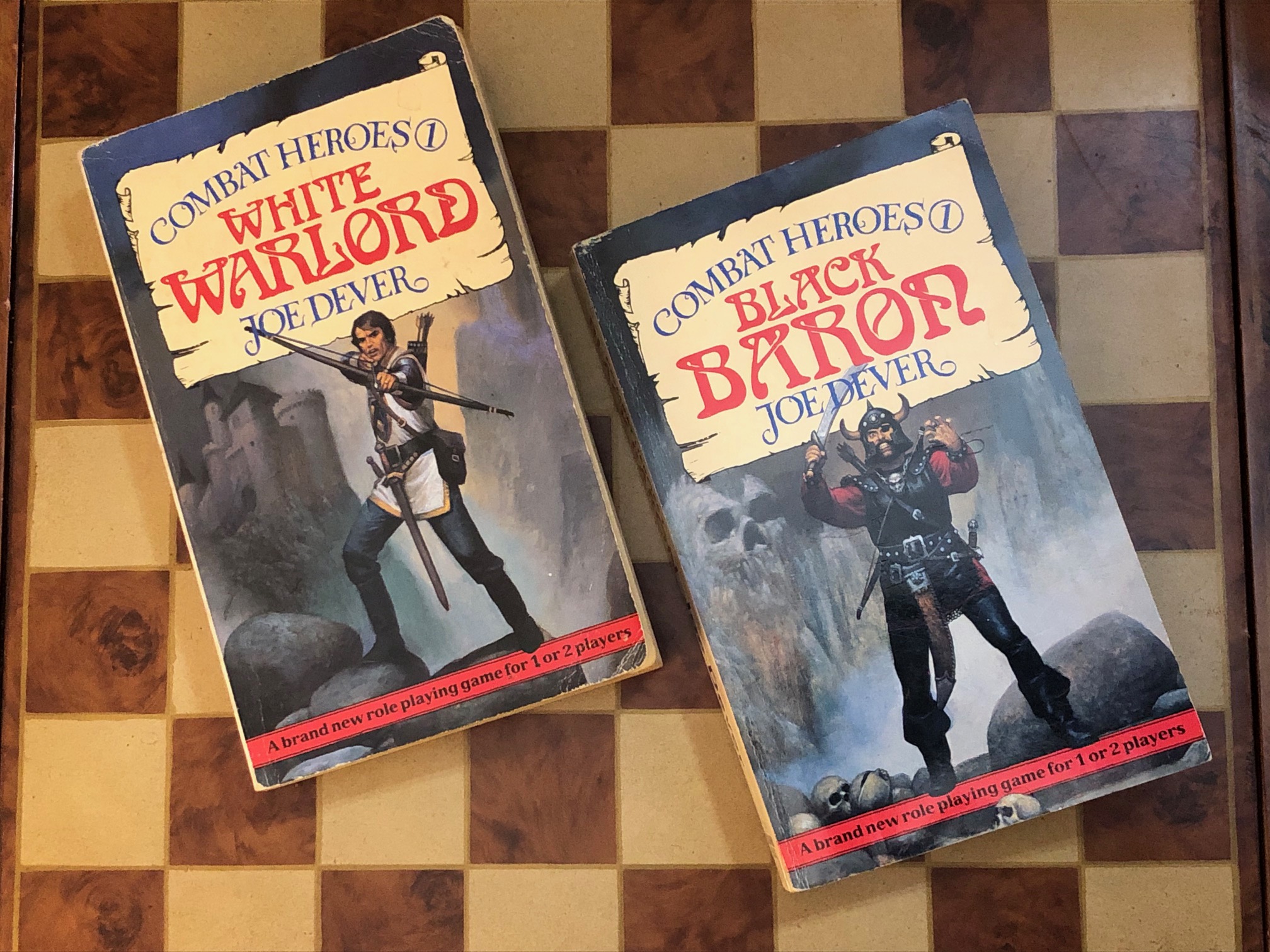
So I haven’t been able to properly test this unusual gamebook set as of yet, since it requires two players, and I don’t know anyone willing to wrap their minds around the complex rules of how to navigate these books with me.
But they’re still worth talking about, and I’m nothing if not half-cocked in everything I do. So away we go into Combat Heroes!
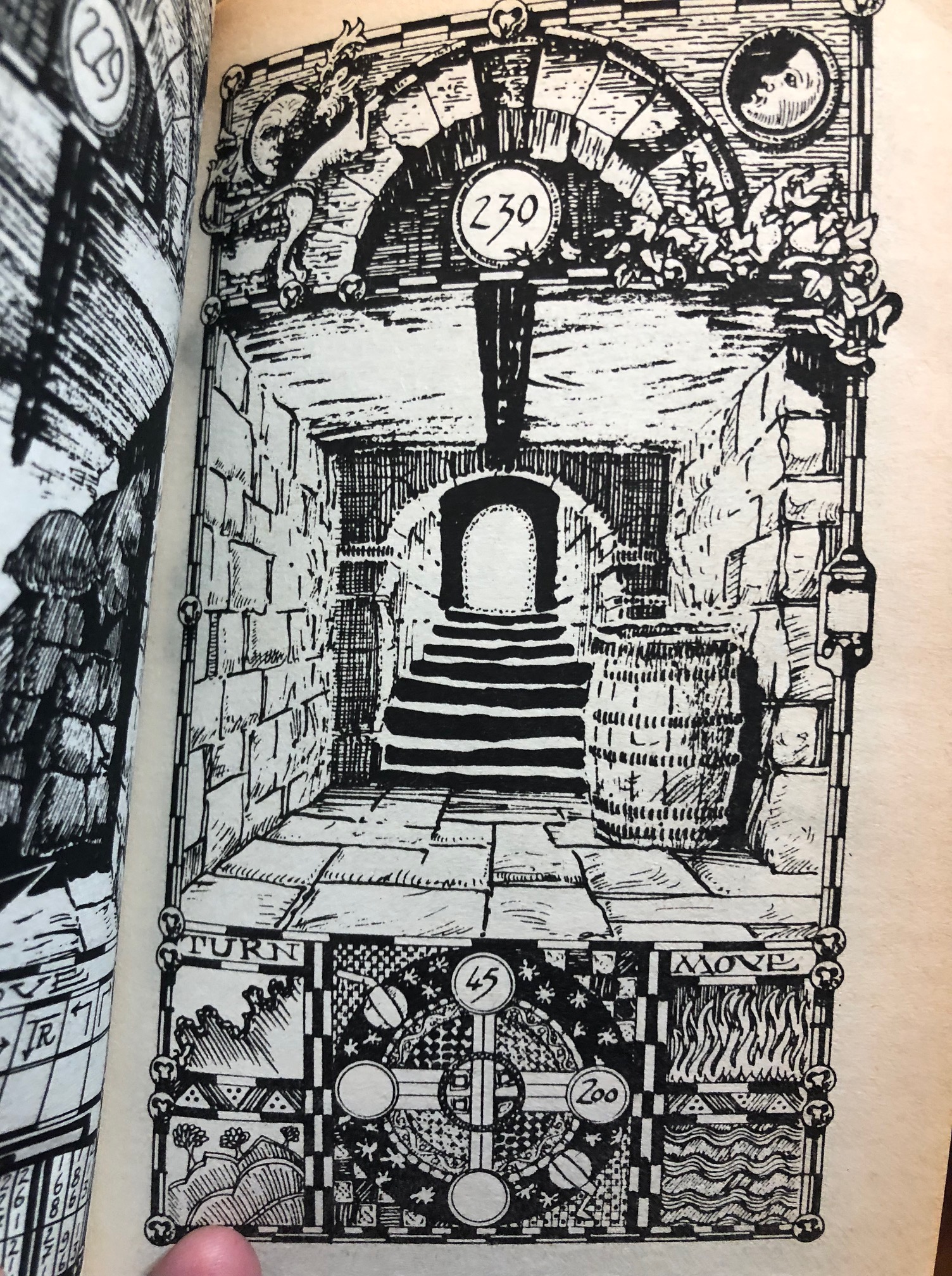
White Warlord and Black Baron are the first of two companion sets in the very short-lived Combat Heroes series by Joe Dever. They promise an unusual experience: not only are they designed to be played solo or with a friend, but they’re basically “first person shooter” gamebooks.
We are talking hundreds of pages like the one to your right, depicting the dungeon setting from the reader’s perspective. It is a very cool touch, and the artwork conveys a very moody scene every time.
The Solo Adventure
Whether you’re White Warlord or Black Baron, the plot is basically the same. Your opposite number has captured you, and rather than outright kill you, he’s thrown you into a dungeon in order to watch you scramble about, falling into traps, for his amusement. You begin with a coin that can be used to open one of the 9 treasure locations in the dungeon, and if you retrieve all of them, you can escape with your life.
I prefer Black Baron’s version of this premise. When you play White Warlord, the Black Baron is a run-of-the-mill villain cackling at you with his band of pirates. But if you play the bad boy Black Baron, the heroic White Warlord comes off like such an arrogant, self-righteous knob, and seems just as likely to put his enemy through an unnecessary death maze as a storybook pirate would be, which makes for a more interesting villain if you ask me.
There’s more text to read in this play mode. Each page has a heads-up display at the bottom: a compass indicating which way you can go. If the number has an x in front of it, that means you turn to the events index in the back of the book and read that entry to see what happens. If it’s a trap, you lose endurance. If it’s a treasure object, you get your choice of which treasures to use to try and open it (and probably lose more endurance as you trial and error which item will open the stupid thing). The item listings on your character sheet are kept cleverly vague so you don’t know which treasure will go in which slot until you find them all. Lose all your endurance, and you die.
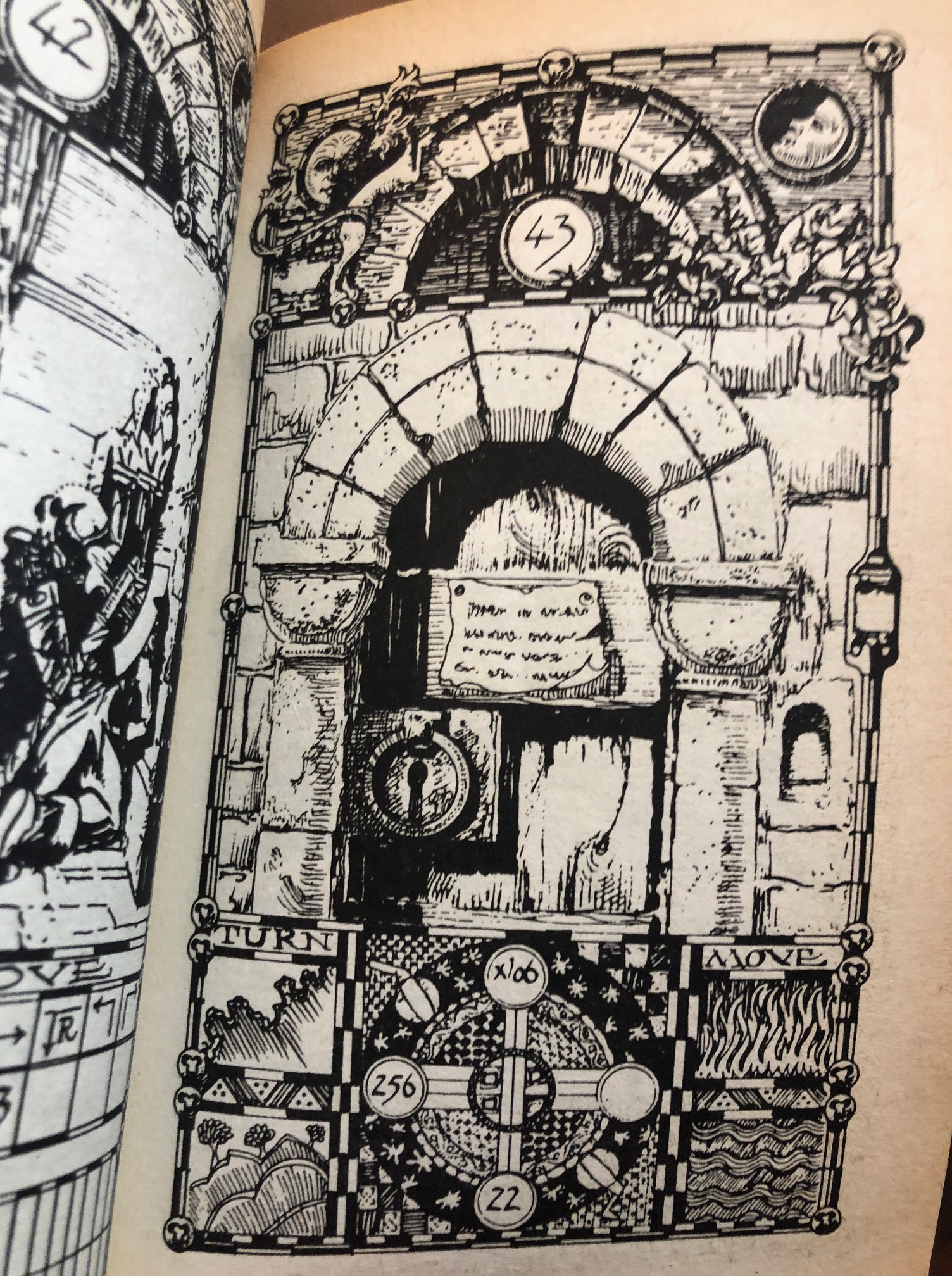
There are, of course, flaws to this whole setup. Mapping out the maze can be confusing because it’s hard to judge your distance from a landmark from page to page. It can feel like miles sometimes just to cross one measly hallway, and getting delayed by traps makes your already dizzy orientation even dizzier.
But the real problem is those nine treasure objects. They’re scattered all over the dungeon, and if you guessed that you have to open them in a specific order or die, you’re absolutely correct! So the solo game consists of meandering around a tiny maze that seems a lot bigger than it really is, watching your endurance dwindle as you try jamming every item in your inventory into a treasure object’s key hole until you figure out which one doesn’t kill you.
Moving through these dark, spooky halls in first person is a very moody experience, though, and I won’t fault it for that. It’s just that the “Russian Roulette Scavenger Hunt” thing kind of derails the whole gamebook train.
The Two-Player Game
In this play mode you get to use your character sheets to the fullest. The premise is identical for both characters: you have come to participate in a one-on-one battle in the Maze of Xenda, a coliseum-like event that warriors like you aspire to join, to finally know whether you’re a bad enough dude or not, for only the baddest of dudes survive a match in the Maze of Xenda.
The books encourage you to play multiple rounds against your foe, so I guess there’s a long line of White Warlords and Black Barons who keep killing each other off in this silly sport.
Here’s the basic idea of how the two-player experience plays out: each of you begins on a pre-designated page of your choice, and then you take turns moving through the labyrinth, calling out the page you turned to. At the bottom of your opponent’s page is a list of “call out” numbers that will tell you where to turn if your opponent has just moved into your line of sight.
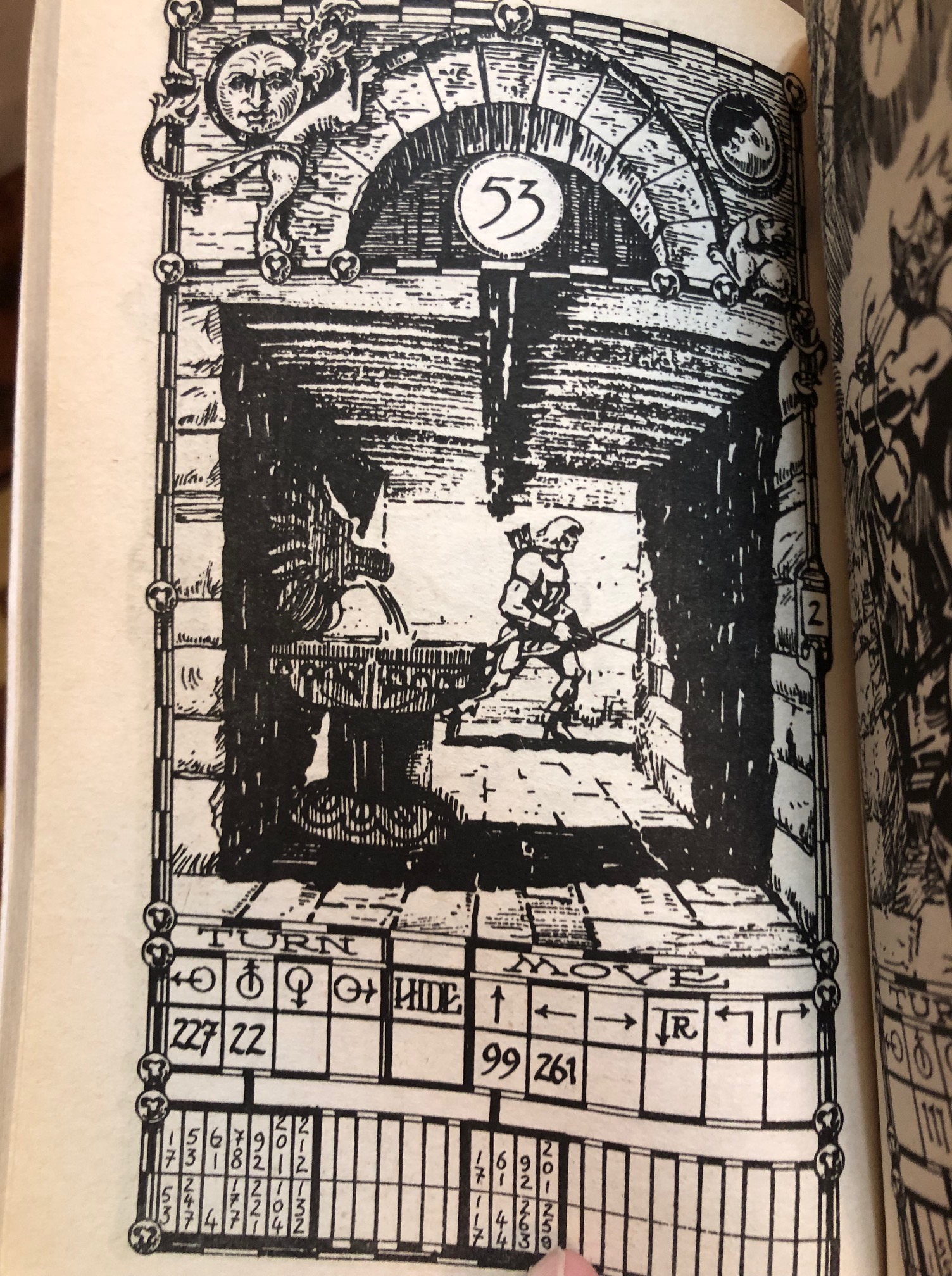
Sometimes this means a face-to-face encounter, and now you and your enemy get to trade shots with each other! Hope you remembered to actually equip your sword or notch your bow.
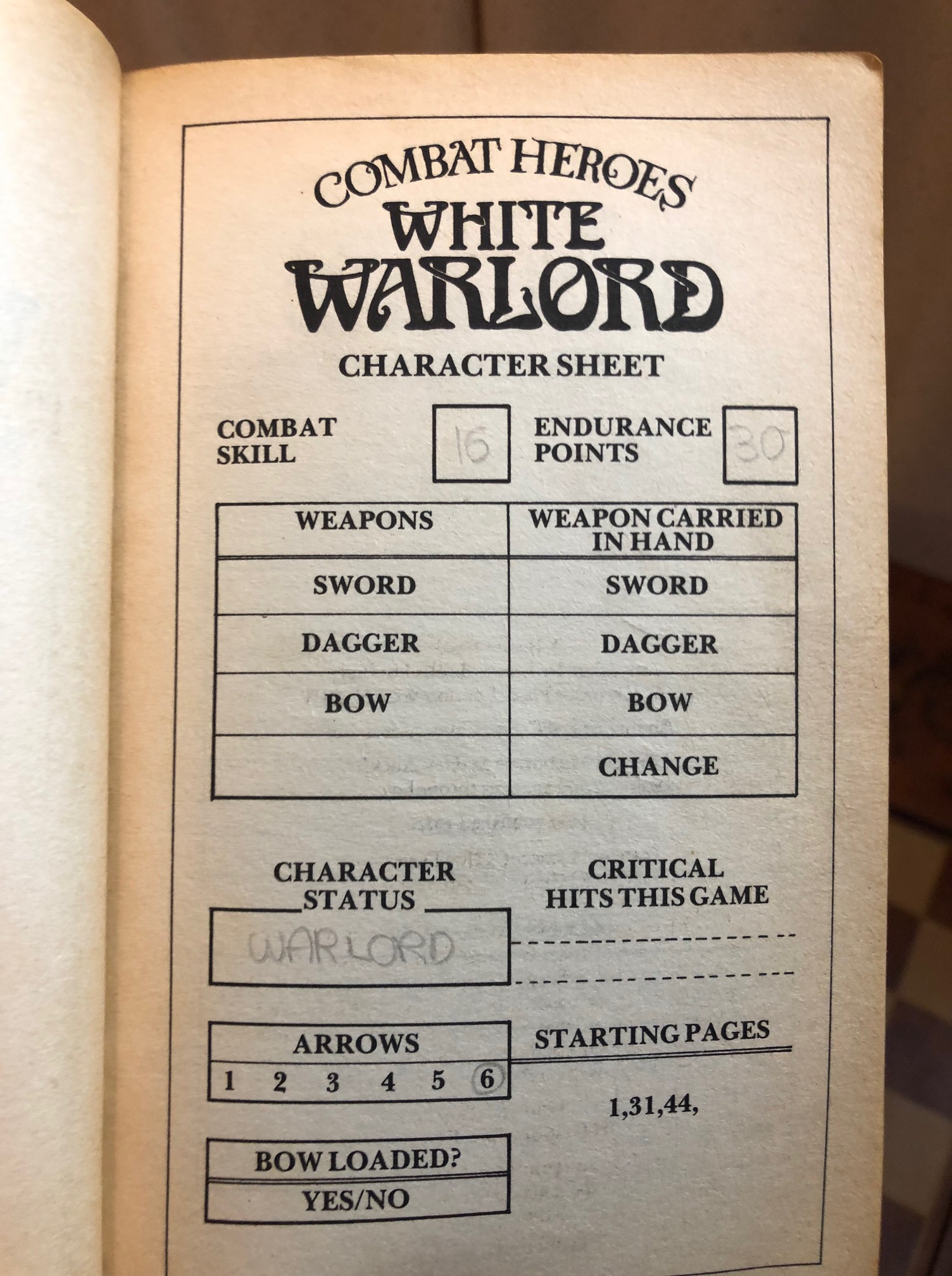
The mechanics used in this mode are myriad. You keep track of which weapon you have in hand, and it takes time to switch between them. You have limited arrows, and have to remember whether your bow is loaded or not (it takes time to load your bow as well).
Your combat skill is used when battling your opponent, and it will get modifiers based on all kinds of situations. Did you remember to equip a weapon for this fight? -8 Combat Skill. Did you even know your opponent was flinging arrows into your rump from behind? -4 Combat Skill. Are you already wounded at the start of the fight? -2 per.
Yes, you can hide and sneak in the two-player mode, which seems rad. If you’re behind your opponent, you don’t have to make them aware of it, and can stalk them around the maze until you get close enough to shank him in the back. Certain objects in the maze allow you to lie in wait behind them while your opponent draws nearer, and then when your opponent calls out the right number, you can spring out of your hiding place…
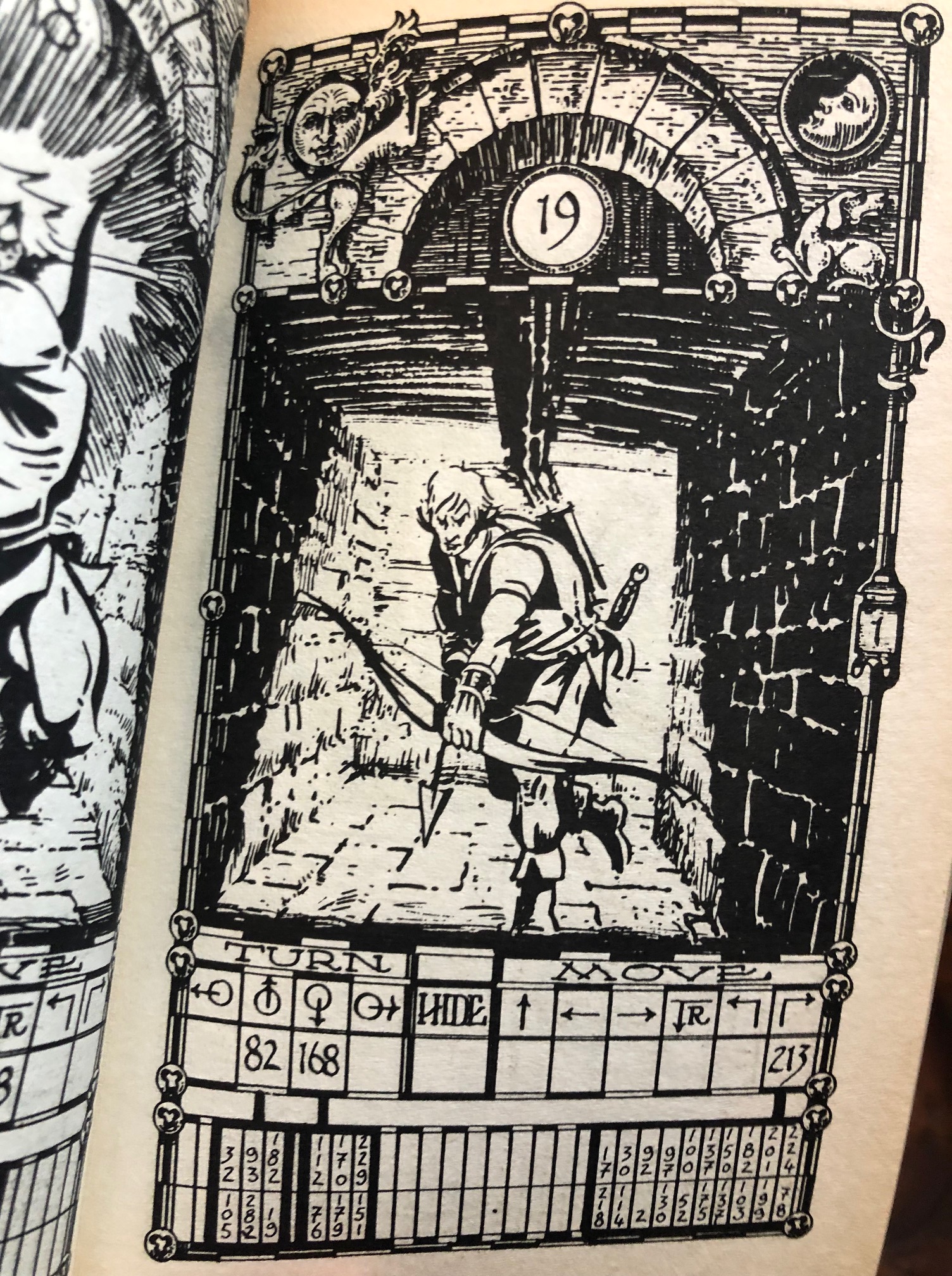
…and hope they were facing the other way. Well, this is awkward.
You win the maze battle by killing OR capturing your opponent, then you tally your score and maybe play again, or maybe decide this is all too complicated and time-consuming and you’d rather play a game of Labyrinth instead.
It is abundantly clear that this is the game mode the books were meant for, and the solo adventure was thrown in for those boring days when the reader’s friends are all stuck at home doing chores and can’t come over to play. I suppose you could play it over the phone, but your parents would throttle you for tying up the phone line for several hours. At some point in the future maybe I’ll get the chance to test drive these babies with someone as deranged as myself.
Final Thoughts
So what we end up with this first set of Combat Heroes books is something that works better on paper than in practice, at least in this iteration. The artwork is truly immersive and sucks you into the setting, but the trial and error gameplay of the solo adventure sucks you right back out, and I could see the two-player mode going either way: hair-pulling frustration and boredom, or gut-busting fun and excitement. Nonetheless, I can’t help but admire the oppressive levels of work and dedication that went into bringing this project to life, and Joe Dever should be commended for it.
The few testimonials I’ve heard about the two-player mode make it sound like there’s a lot of fun to be had, so if you have friends who are into weird high concept stuff like Combat Heroes, get yourself a set and drag them into the Maze of Xendar. Just don’t forget to actually load your bow.
Time for bed. Uncle Mac out.
 Uncle Mac's Gamebook Shack