
“I liked being a robber.”
My second dip into the Storytrails public pool is an adventure in a gloomy and seemingly Norse-themed fantasy setting. The cover above is courtesy of Demian’s Gamebook Web Page. The version I’m reading is from The Storytrails Book of Science Fiction, which contains four different Storytrails books. It’s weird that this Norse fantasy tale is included in a science fiction anthology…I guess magic is a form of science that hasn’t been harnessed yet?

The Stone of Badda introduces us to an unnamed warrior and his friend, the talking raven Ka, who live in the valley of Leshka in the age of the vikings (I think). Our hero hangs out with Ka on the daily by the lake whether it be summer, fall, or winter. But this year winter is here to stay, as a nefarious ice demon has taken residence in Leshka and frozen everything. Ka tells our hero of the Old One, an ancient witch who knows a way to drive out the demon and restore life to the valley.

The time-travel antics of Terror in the Fourth Dimension would obviously be a hard act to follow, but even if I’d read Badda first, I think it would still strike me as a bit lackluster. The Norse setting is a nice change from the usual British fantasy setting most gamebooks adopt, but it’s not different enough to really stand out to me. The descriptions and the dialogue are all very basic and dry, in an effort to make the narrative feel like an ancient epic. There’s a constant air of doom throughout the story, though, to remind you that your homeland is in peril.
The adventure does give our hero a lot to do: fighting horsemen and dodging sea monsters and braving magic castle defenses and what not. His quest boils down to collecting fragments of the titular stone, which, when assembled, can supposedly dispel the ice demon from Leshka. Because of the linearity, the quest mostly boils down to the hero stumbling across each piece of the stone: there don’t appear to be any side-quests to hunt down stone pieces. You’ll either naturally come across them all, or you’ll end your quest prematurely by making a poor choice.
And you can fail your mission. While there aren’t technically any “game overs” like in a typical gamebook, there are at least a couple of ways where you can screw up and fail to save Leshka from its frigid fate. The endings are all strange, though: each time I reached one, it took me a minute to realize the story had actually ended. One of the bad endings had a sense of finality to it, and it was done pretty well, but the rest felt like the story had been abruptly snipped off near the end.
Even the good ending feels this way, because (SPOILERS!) the hero doesn’t actually face the ice demon who’s causing all the trouble. The assembled Stone of Badda dispels the winter from Leshka, and presumably the demon with it. There’s a greater fanfare given to the rebirth of your slain friend Ka than there is of accomplishing the mission, which I guess is the point of the adventure: that friendship is the most important thing, even when everything else is cold and dead.
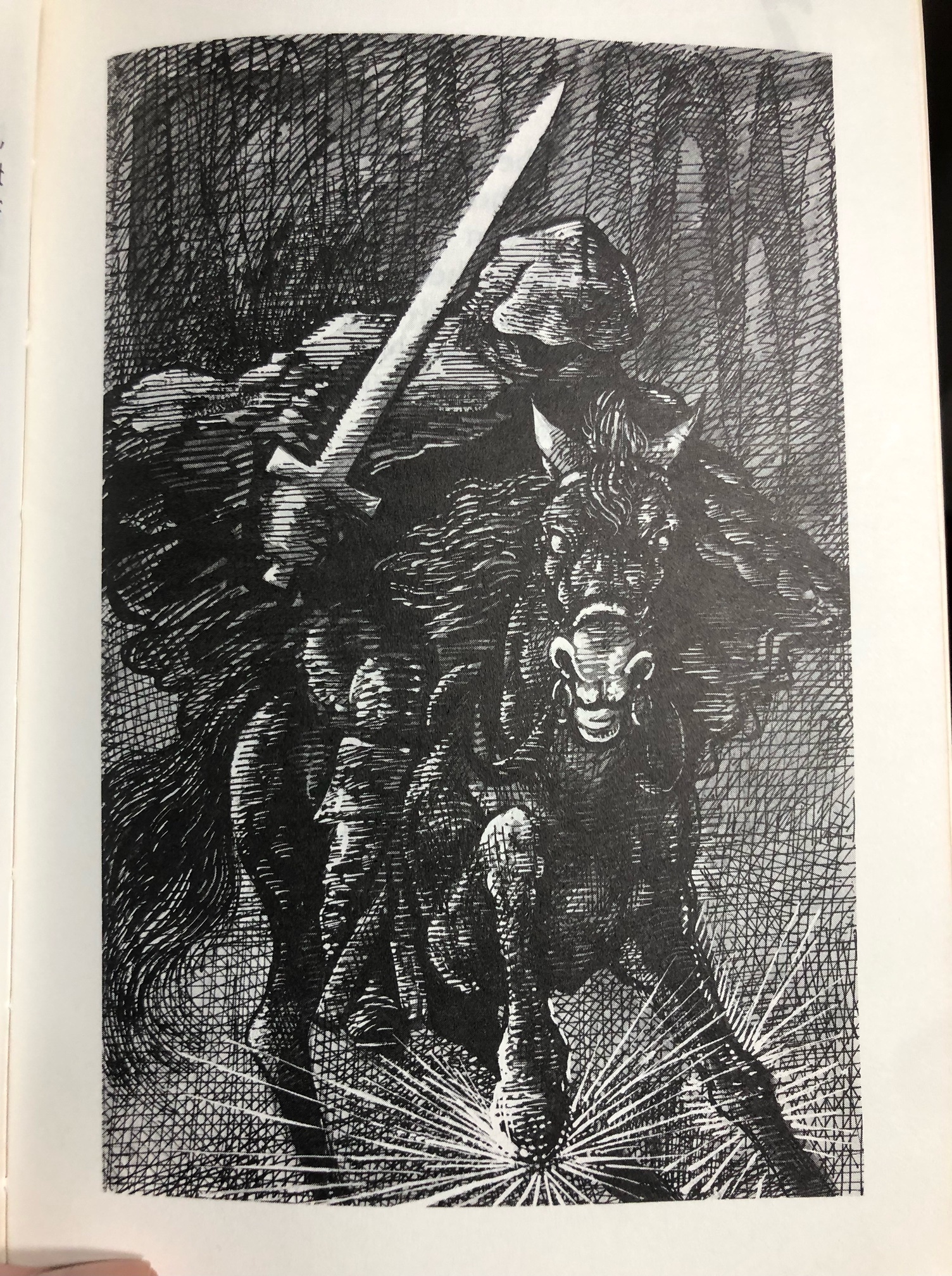
The majority of the quest takes place in the Otherworld, which turns out to be the land of the dead, and in a way, the Otherworld is a pretty neat setting. I liked how it really doesn’t appear any different from the land of the living. Dead people look and act like they did in life, except they can’t be hurt and don’t need to eat (though they can eat to pass the time if they imagine the food they want). In a longer story, author Allen Sharp could have found many creative ways to milk the idea of a living man posing as a dead one in the Otherworld. Sadly there just isn’t enough page space for something that interesting. The most we get is our hero clashing swords with a dead man he is unable to kill, and has to think of another way to defeat him. Later the same man tries to run off with all the stone fragments in his possession, and I have to wonder why he didn’t just kill the hero for them once he knew he was mortal. Maybe he knew once the hero was dead, they’d be locked in an endless duel forever?
Then something else kills him anyway, so it turns out dead folk can be killed after all. Sometimes. I guess. Whatever.
Having the talking raven as a sidekick is the highlight of the story. He’s actually useful, and you dread losing him. Oh, the hero doesn’t obsess over him like Princess Sarah does over her horse in Pledge of Peril, but it’s made clear that they’ve been buddies for ages. Kind of odd that he didn’t know his feathery BFF was actually the familiar of the old witch in the beginning of the story. I mean, unless talking birds are a common sight in Leshka.
Worse than the linearity of the story is the use of copy-pasted chapters, which seems to be a common trend with Storytrails. Some choices will only make a slight difference in the narrative, and this is always a disappointment, since those duplicated chapters could have been used to flesh out the story more and maybe give us more perils to encounter. Maybe the hero could have joined an arrow-catching contest for one of the stones, a game that would be deadly for him, but harmless to the dead contestants.
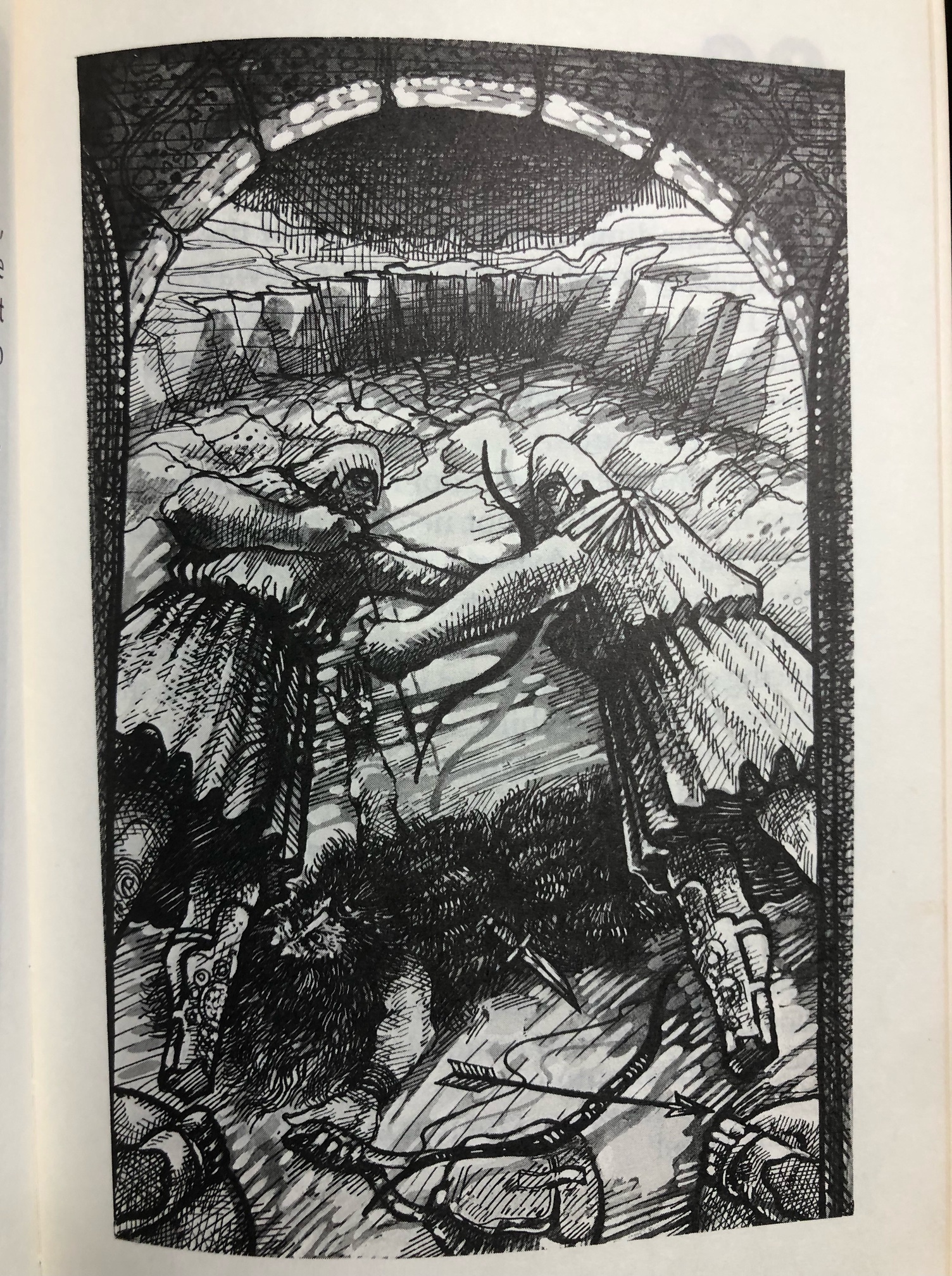
The illustrations by Hugh Marshall sell the dark atmosphere of the Otherworld pretty well. But the copy-paste curse spreads even to the artwork! A few images are so similar to one-another I had to look closely to see the difference!
It’s difficult to talk about this one because it’s so generic. There are some cool ideas here, but nothing so stand-out that I’m likely to revisit it. Storytrails books are already so bite-sized that I’m not likely to come back to them at a later date except out of curiosity; when they’re also unmemorable, it’s a boredom double-whammy. It’s not a badly written story by any stretch. It didn’t make me rush to the end to get it over with like The Crystal Trap,…but I have to wonder if I would have finished this one if it wasn’t so short. I struggled to even find a memorable out-of-context quote for the article opener!
Worth getting if you’re a completist. Otherwise save your money for another Storytrails, especially given how spendy they are these days.
Time for bed. Uncle Mac out.

 Uncle Mac's Gamebook Shack