Most of the kids figured he was at least a hundred years old and had probably been crazy for the last fifty.
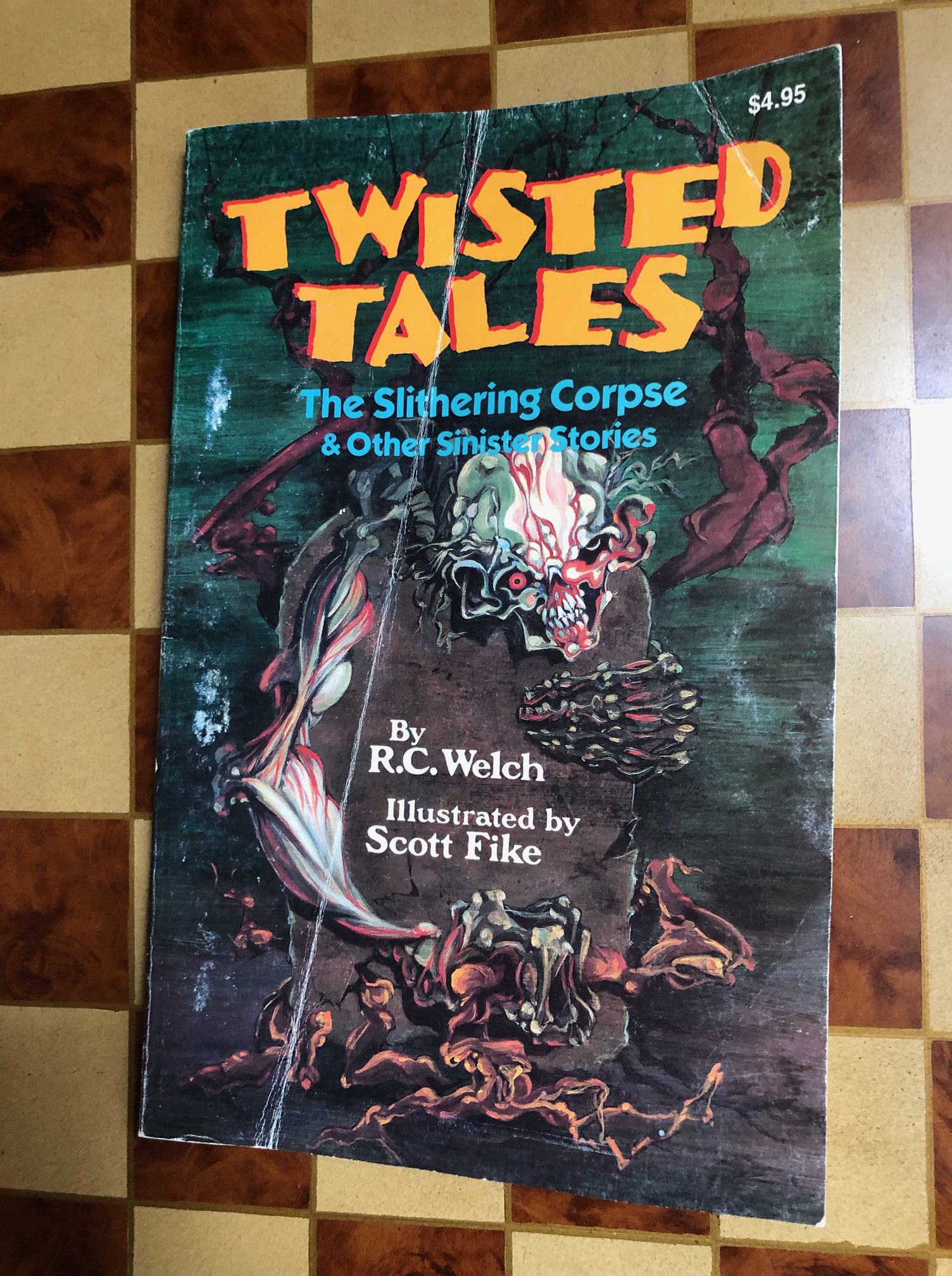
Today we wade waist-deep into another anthology by veteran terrorizer of children, RC Welch, the man who had the guts to do what RL Stine refused to do: actually scare young readers.
I sung praises for the debut volume of Scary Stories For Sleep-Overs a few posts ago, so I was delighted to learn he had also written not one, but two volumes of another anthology series called Twisted Tales (also one volume of Scary Stories for Stormy Nights, which I will cover later). I had always wanted to read more of Welch’s takes on the young horror sub-genre, and finding so many undiscovered troves of his work was pretty exciting.
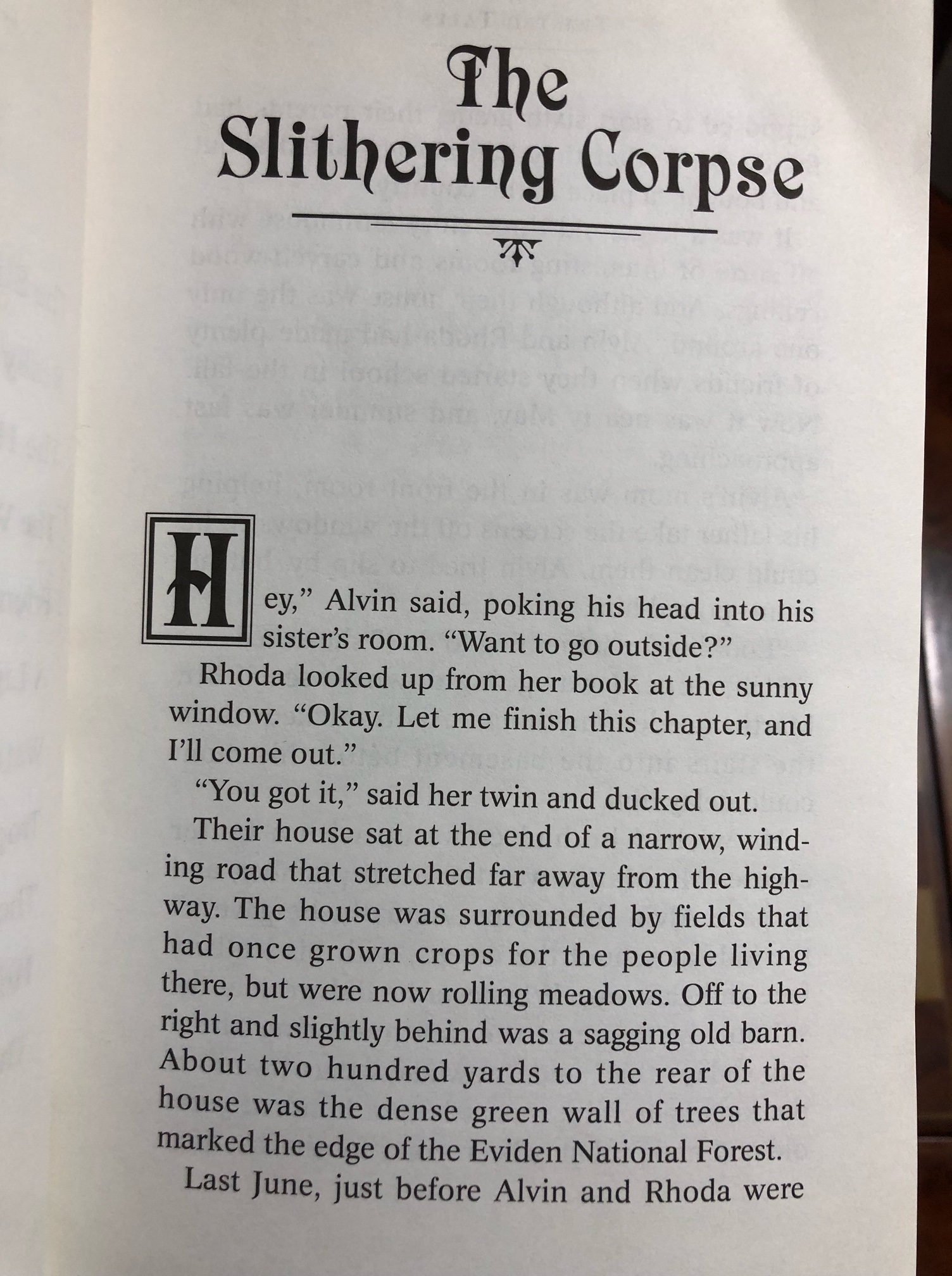
This series does differ from Sleep-Overs in a couple of ways, which took a while for me to put my finger on after reading both volumes. Sleep-Overs has a strong “Tales from the Crypt” and “Twilight Zone” vibe, and several stories from that book would feel right at home in either property. Some stories were morality tales where bad, thoughtless, selfish, or otherwise stupid kids got their comeuppance, and the later volumes by Q L Pearce followed this trend. Others were straight-up nightmares befalling normal kids who were just minding their own business, and their fate usually had an ironic twist. Some stories were clever, others were shocking, and a few were cathartic.
Twisted Tales ditches all of that and banks on shock value for the most part. Sometimes the kids in these stories bring about their own fates in a roundabout way, but for the most part they just have the worst luck in the universe. There’s rarely any irony here: just messed up stuff happening to poor suckers who may or may not have deserved it. So there’s a tradeoff: the stories aren’t quite as satisfying on the narrative front, but man do they deliver on the nightmare imagery and spooky atmosphere.

Just about every story in this volume, The Slithering Corpse & Other Sinister Stories, does an excellent job building up the suspense and terror, drowning you in atmosphere as we wait for our doomed protagonists to meet their fate. Even when the payoff is disappointing, the buildup is usually a great time.
I just wish that payoff was more consistently fitting to the stories. For many of them, once the source of the horror is revealed, you’re left scratching your head rather than quivering with fright. It’s possible these were the stories that Welch cut from Sleep-Overs and decided to put them in their own collections so as not to waste them, but they could have used more polish before stamping Twisted Tales on the final cover. There’s still a lot of good scary ideas here, and like I said, Welch builds a great sense of tension and ambience in nearly all of them.
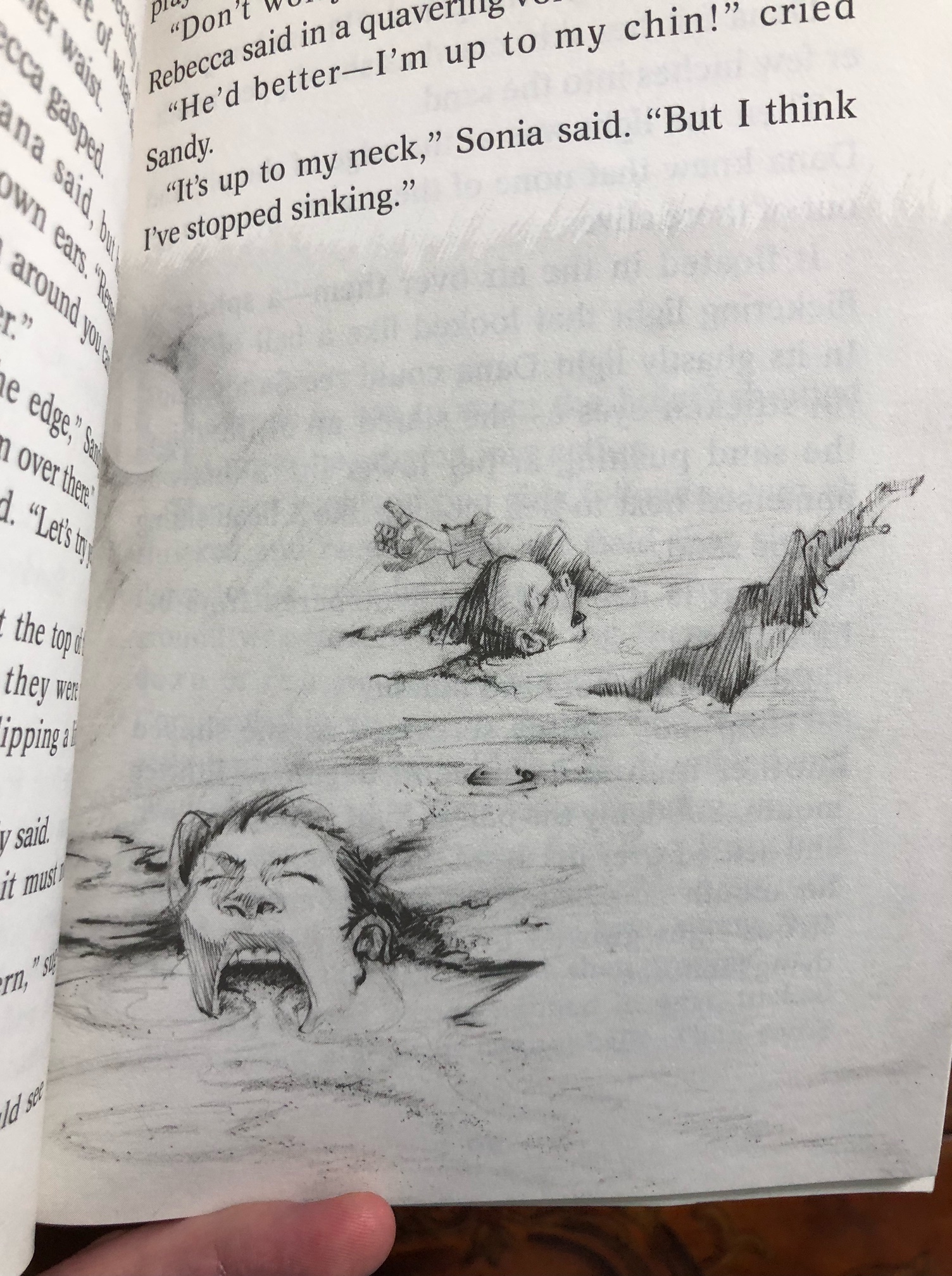
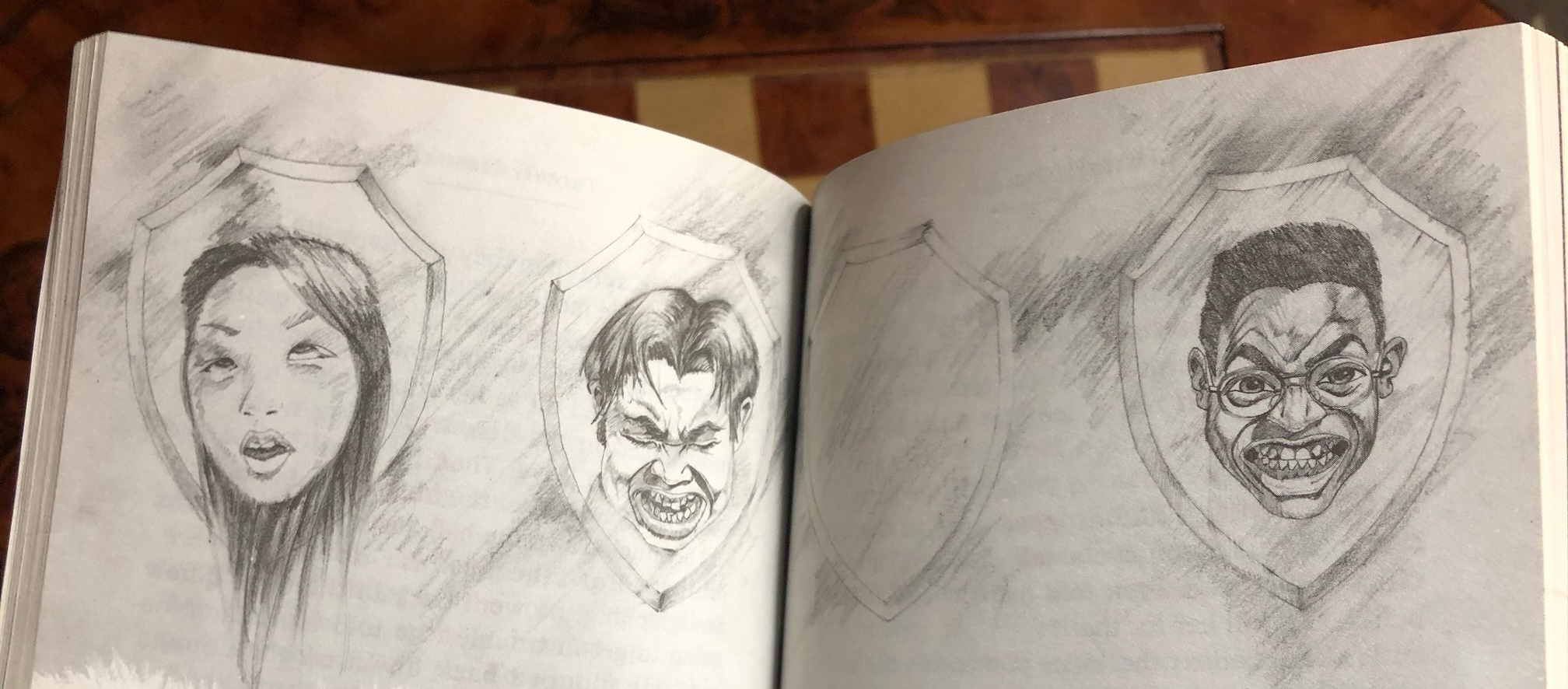
I can’t help but feel the artist Scott Fike was trying to channel Stephen Gammell, the surreal and spooky artist of Scary Stories to Tell in the Dark. Most of the time it seems to fall flat for me, although a couple images definitely stuck with me, like the wall-mounted taxidermy heads or the quicksand girls.
If you’re a young reader looking for another horror fix, this isn’t a bad pit stop. Only a couple stories are bangers, but they all have good atmosphere and suspense, and they don’t lack for gore, either. The Sleep-Overs tales are cleverer and more satisfying, but Twisted Tales is still a fun ride in spite of its flaws.
I’d still take this over a haunted Halloween mask or killer lawn gnomes any day of the week.

As usual, I will break down each of the stories in this book, offering my thoughts and taking a guess at the moral of the story. If you haven’t read The Slithering Corpse & Other Sinister Stories yet, go bag a copy and read it for yourself, then come back and see if you agree with my impressions. Whether you agree or disagree, share your thoughts in the comments!
~
The Slithering Corpse
SUMMARY: While trying to avoid helping his mom do the dishes, Alvin ducks into the basement where creepy old town plumber Mr Martin is fixing the family’s water heater (they live in a farm house way out in the boonies). Mr Martin somehow knows the little scamp is thinking about going into the woods that week to explore, and warns him about something called “the slithering corpse” which apparently eats unwary forest travelers. Alvin tells his twin sister Rhoda and their school friends about it, and they decide to camp on the edge of the farm house property, right by the woods, to go “corpse watching.” Naturally they don’t mention the whole slithering corpse thing to their parents.
The kids all hang out in one big tent on the edge of the woods and tell ghost stories until late at night, when they decide to go looking for the legendary slithering corpse. They rationalize that since the corpse only terrorizes people in the woods, they’ll be fine if they leave the woods should they run into it. Only Erica is too scared to go, and she stays behind in the tent. Just as the kids reach a small clearing in a particularly spooky thicket, Erica is startled by Alvin’s dad back at the tent, who corrects her when she mentions the slithering corpse: Mr Martin meant “slithering copse,” as in a grove of trees and shrubs…like the one that is now devouring Erica’s friends.
MY THOUGHTS: This one got the collection off to a good start. Mr Martin is a weird modern oracle of sorts, warning the kids about the doom and gloom awaiting them in the woods. It’s never fully explained if Alvin misheard Mr Martin, or if Mr Martin is just a poor speaker, and maybe that could have been cleared up a little better. But the story works for me. The camping episode is rich with spooks and the twist was a pleasant surprise. You spend the entire story waiting to see the slithering corpse, waiting to see if it’s going to be scary or not, or if it’s even real at all, and there’s a great bit of misdirection where we think the “corpse” has gotten Erica and is now waiting for the others at the tent. Then we realize Alvin is just an idiot who walked his whole posse into a deathtrap. Kudos to Erica for being the smart one and staying behind.
MORAL: Don’t be a follower.
~
Really Good Chew
SUMMARY: Neil hates going to the market with his mom because she’s a white rabbit who is always in a rush to get her errands done and won’t stop to explore the interesting shops there. Neil ditches his mom at one point while she argues with a shopkeeper, and sneaks across the street to visit a weird new candy shop. The friendly hobbit-like shopkeeper introduces Neil to Timber Wolf Jerky, the ambrosia of beef jerky. Every time Neil takes a mouthful of the stuff, he has jarring dream visions from the perspective of a wolf.
Neil becomes addicted to Timber Wolf Jerky and saves all his money to stock up on it. He can’t even think of eating anything else and starves himself while waiting for the next visit to the market. On that fateful day Neil buys ten pouches of the jerky and runs off into an alleyway to stuff his face with it. He sees visions through a wolf’s eyes again, this time stalking the streets until it finds an infant carelessly abandoned in an alley outside an orphanage (I think). Neil discovers that he is now the wolf, and the new werewolf apprentice of the friendly shopkeeper, who goads Wolf-Neil into eating the baby.
MY THOUGHTS: A surreal take on the addiction metaphor that probably could have used more polish. Not much else to say about it. Would probably the weakest entry in the anthology, if it wasn’t for the interesting “addiction” take.
MORAL: Winners don’t use drugs.
~
The Housewarming
SUMMARY: Lloyd and Duncan have been left alone together in Lloyd’s new house, which came with all its furniture intact for reasons never explained to Lloyd or his family. After a bit of comic books and roughhousing they decide to play hide and seek. The boys take turns blaming each other for coming out of hiding to rearrange the furniture while the other’s back was turned, until it dawns on them both that they are not alone in the house.
Before they can call Dad for help, all the furniture in the house comes alive and attacks the boys. After watching a table scissor Duncan in half, Lloyd runs upstairs and attempts to jump out his bedroom window, only to be chomped by the window frame mid-jump.
MY THOUGHTS: A stellar example of the good and bad points of Twisted Tales. The first half of this story is absolute horror gold. The subtle suggestions that the boys aren’t alone in the house instantly put me on the edge of my seat, and I couldn’t wait to see how it turned out. Once the furniture started throwing down, all that tension leaked out in a single weak fart, punctuated by the abrupt demise of the boys. This could easily have been the best story in the collection if it had gone somewhere more worthwhile than killer chairs.
MORAL: Bring your own furniture.
~
The Watcher in the Woods
SUMMARY: Tommy and his pals can’t wait for last bell to ring so they can go outside and play their favorite violent hybrid of football and soccer. For some reason, today there’s a strange hillbilly kid in red suspenders watching them from the woods on the edge of campus. Whenever they approach him or talk to him, he runs off into the woods and disappears.
Tommy and company gets increasingly aggressive about trying to meet this kid and find out why he’s stalking them, to the point where they flat-out chase him like a lynch mob. This leads them all tumbling into a dry, ancient well hidden by the thickets, leaving the boys battered, bruised…and trapped. Their only company in the well is a skeleton of a boy with red suspenders, and a message carved into the decrepit well bucket explaining that he had been pushed down there by his friends in 1935 and left for dead. Just like Tommy and his friends will be. The hillbilly kid smiles with triumph, now that he is no longer alone.
MY THOUGHTS: Makes for a decent and intriguing read, though I can’t help feeling it could have benefited from a few more rewrites. The fact that the hillbilly kid never utters a word is a big plus, and makes him a lot more sinister than if he’d uttered some cliche dialogue about just wanting a friend or something.
But surely this well isn’t so far from school campus that no one would ever find these kids again.
MORAL: Stay out of the woods. Nothing good ever happens there.
~
Friends Forever
SUMMARY: Julie is dying of some sort of wasting disease in the hospital, and only her classmates Abby and Suzanne ever come to visit her anymore. Julie is grateful for any company besides her emotional trainwreck mother, who is understandably distraught by her daughter’s condition. When away from the hospital, Abby and Suzanne are somewhat callous, making morbid jokes about the situation and complaining about how depressing it all is. They sympathize with Julie and her mom, but it sometimes appears they’re visiting out of pity or guilt or something otherwise selfish. This doesn’t stop Julie’s mom from praising them for being such good friends to her poor Julie.
On their last visit, Julie makes Abby and Suzanne promise to check in on her mom after she dies, to make sure she’s keeping it together. The girls promise, albeit reluctantly. The next day Julie’s death is announced at school, and Abby and Suzanne dread having to fulfill their promise by going to Julie’s house to call on her grieving mom. Mother is pleased to receive them and gives them homemade cookies before asking them to come up to Julie’s room for a spell. Again the girls are reluctant, but they agree…and are quickly slaughtered by the insane mother so that Julie can be with her “best friends” forever.
MY THOUGHTS: I’m on the fence about this one. On the one hand, it’s very grim. Watching a parent grieve over her child’s slow death is no fun, especially when that grief drives them insane. On the other hand, if I interpreted Abby and Suzanne correctly, it’s a pretty sweet “just desserts” story about a pair of selfish girls whose phony kindness gets them killed. If Welch had cranked this aspect to 11 it would be much more apparent, and as a result, a much more satisfying story: making Abby and Suzanne reprehensible in their callousness toward Julie, maybe even doing it all for the sake of their image at school. That would have made the payoff so much sweeter. Without exaggerating that element, the whole thing is objectively just a downer of a story.
MORAL: Don’t be a fake friend.
~
A Light at the End of the Tunnel
SUMMARY: Dana and her friends wake up in the swamp after a terrible hovercraft crash. Apparently the hunky school counselor Coach Marcus was trying to mack on the underage girls by taking them on an unscheduled hovercraft ride though the bayou, but his poor driving abilities led to the disastrous crash that obliterated his head and stranded four students in crocodile territory. Dana and the girls argue over the merits of walking through thirty miles of possibly-croc-infested swamp and sitting around waiting for a rescue, before opting for the former.
The girls see a light through the fog of the marsh and follow it, assuming it is the beacon of a lighthouse. Unfortunately this leads them right into a pit of quicksand, and the quartet of teens begins to sink and panic. That’s when the mysterious light moves toward them, leading them to believe it is a person holding a lantern. They holler to their savior for help, but when it arrives, it is a will o’ the wisp which begins devouring the helpless girls’ life force.
MY THOUGHTS: By far the strongest opening of all the stories. We’re thrown headlong into the aftermath of a crash that has left one person dead and the rest battered and stranded. Marvelous beginning to what turns out to be an atmosphere-rich story…with a supremely disappointing ending. I fully expected something related to crocodiles, and as predictable as that would have been, it would still have been better than what we got. The will o’ the wisp comes quite literally out of nowhere, as if it stepped into the wrong story at the last minute. Makes me wonder where this story’s ending wandered off to.
Despite that ending, though, this is a great read that really leaves you feeling stranded in marshy crocodile territory, and the crash site is a striking and memorable opener.
MORAL: Don’t do it unless you know what you’re doing.
~
Water, Water Everywhere
SUMMARY: Cory and his friends make regular trips to the swimming hole in the woods near their neighborhood, downstream from the city paper mill. At this swimming hole there is a small, pitch-dark, underwater cave the kids use for hazing members of their clique who have done wrong or lost a bet. The victim redeems himself by swimming into the cave without a light and retrieving a small dog statue left in the silt. As the new kid, Mel, is forced to “swim the hole” and retrieve the statue, the other kids wait on the surface and ponder why the water is murkier every time they visit the swimming hole, blaming pollution from the paper mill.
Mel has been down a long time, and the kids begin to panic. Just as they are drawing straws to see who goes down to check on him, Mel’s strangled corpse bobs to the surface, and shortly afterward one of the girls is seized and strangled by polluted water tentacles while the other kids flee the swimming hole. Nobody believes their story about a killer water monster, until it follows the kids home through the sewer system and picks them off in their bathrooms and kitchens.
MY THOUGHTS: Weak. The first stretch revolving around the spooky underwater cave, and the kid not coming back for a long time, really set the stage for something tense, but Welch may have written himself into a corner with this one. From the appearance of the first body it goes downhill, and by the end it feels like the author just wanted to get this entry over with to round out the anthology. Without a doubt the bottom rung story of the collection.
The artwork of the girl being twisted into a pretzel by the water monster is pretty gnarly, though.
MORAL: What did I say about staying out of the woods? Are you listening to me?
~
Trophy Hunter
SUMMARY: Rudy and sister Gina watch a weird horror movie that Rudy’s friend loaned to him, about a maniac who stalks and murders kids like a big game hunter. He and his sister Gina are alone at home, and as the movie progresses, Rudy keeps scaring his sister until she gets fed up and leaves to hang out at her friend’s house instead. Rudy warns her that mom and dad told them to stay indoors, but Gina ignores him and calls her friend before heading out the door.
When Rudy returns to the movie, he watches as the killer is now stalking Gina on her walk to her friend’s house. He’s about to kill her as she approaches her friend’s front stoop, but just then the door opens, and the killer runs and hides as Gina’s friend comes outside with her mom to greet her. Rudy calls their house and tries to warn her, but she doesn’t believe him. When he turns back to the movie, he sees to his horror that the killer has given up on Gina, and instead come to kill the stupid kid she left home alone.
MY THOUGHTS: One of the creepiest stories in the collection. It’s not just the premise, which is somewhat predictable for a veteran of spooky shorts, but the back and forth between the film’s depiction of the killer stalking his victims, and Rudy as he begins to realize what’s happening. The finale is great too, as we realize just how much more tempting a target Rudy is now that he’s chased away his only protection.
MORAL: Don’t leave the house.
~
The Sins of the Father
SUMMARY: Dena is bored out of her mind staying at Grandma’s house while her parents are off exploring the Scottish highlands. She changes her mind when her sick old grammy cryptically hints at some family drama between her dad and her Uncle Walter, whom Dad had apparently wronged. Dena has never met Uncle Walter, and Dad never talks about him, but whatever the beef between them, it sure gets Grandma riled up. Dena goes outside and meets a neighborhood kid who is scared of Grandma and accuses her of being a witch, but Dena scoffs at this silly notion.
When she goes back inside, Dena hears a commotion in the attic, a part of the house she is forbidden to enter. Naturally she enters, and finds a giant ogre of a man living up there, who causes her to fall down the attic steps and go unconscious. She awakens tied to a bed, watching Grandma mix something in a cauldron while the ogre–her Uncle Walter–watches. Apparently Dad pushed Uncle Walter down the stairs when they were younger, and left him brain-damaged, and when Grandma expected Dad to take care of his invalid brother as penance, he refused and severed all ties with his weirdo family. To repay this transgression, Grandma is mixing a potion that will allow her to swap bodies with the young Dena, so that she may continue looking after Uncle Walter.
MY THOUGHTS: Feels out of place in a collection like this. With a bit more fleshing out it might have fit in a later Sleep-Overs volume, but in its current state it fails to have much impact. The setting is great, a girl stranded in her spooky grandma’s farm house in the middle of nowhere. I can’t help feeling like more could have been done with the family’s background, and the setting itself.
Dena almost qualifies for a “just desserts” protagonist. She’s a self-absorbed teen who doesn’t hide her boredom at Grammy’s house, and the one time she meets someone her age, she turns up her nose at him for calling Grammy a witch. I thought you were the one who was bored and creeped out by your grams, girl! Give Huck Finn a chance! Of course this status gets revoked when we realize Grammy was planning to steal her body all along.
EDIT: Hang on…Dad severed all contact with Grammy’s side of the family, right? Why would he leave his daughter in her care, then?
I take it back. This one is silly.
MORAL: If it looks like a witch, and smells like a witch, it’s probably a witch.
~
Hospital Stay
SUMMARY: Joseph is laid up in the hospital after appendicitis surgery, and is dismayed to learn he will be stuck there for at least a few days. Joseph manages to befriend the kid in the next bed, a tonsil-ectomy patient named Larry, who rasps about the kid at the next bed, Dean, who is supposedly going to die soon, or so said one of the nurses. One night Joseph is struggling to sleep through his pain and discomfort, and witnesses one of the doctors giving Dean an injection and carrying him off. Joseph follows, curiosity piqued.
Tailing the doctor and his dead(?) patient, Joseph is led into a basement-level workshop, where he overhears the doctor arguing with a client on the phone about money, mentioning that it’s not easy to get parts nowadays. Joseph realizes the doc means body parts, like Dean’s, and runs upstairs to alert the nurses and another doctor. He leads them downstairs to the workshop to show them the evidence, only to learn the hard way that the entire hospital is in on the organ harvesting racket.
MY THOUGHTS: Not great, but it is fun. The mystery of the hospital is intriguing, and Josephs journey to the lower levels is intense. The story ends on a great “oh crap” note that brought a smile to my face.
The premise of corrupt hospital staff abusing their patients is also a very real-life horror topic, especially now that legal euthanasia is becoming popular.
MORAL: Stay out of hospitals, too. In fact, refer to the moral of “Trophy Hunter.”
~
The Reader
SUMMARY: Bookworm Tony watches a gnarled old man leave a mysterious red book on the bookshelf for medieval armor, fantasy, and other favorite subjects. The illustrations are so vibrant and realistic he can’t help but check it out with his other books. It is written like the diary of a wizard on death row in medieval times, who has made a terrible pact with demonic forces to escape his execution by pawning it off on others. Of particular note is the last illustration, depicting a disturbingly long line of people waiting their turn at the executioner’s chopping block.
While reading the book late at night, Tony realizes that one of the people in line is a young boy who looks just like him. He also discovers over time that the line is moving, and his avatar is getting closer to the executioner’s axe, and anyone he showed the book to–like his friend, or his mother–now appears in the long line of condemned victims. As Tony’s avatar kneels before the executioner’s axe in the drawing, the real Tony helplessly awaits his death.
MY THOUGHTS: The idea for this is awesome, and the changing illustration is absolutely disturbing. It’s not just that it’s changing, it’s the subject matter. Everyone in that picture must be a real person who’s been duped into taking the author’s place in line. That’s a lot of dead people.
The problem is we don’t actually see anyone die, so we never get confirmation that the book is deadly, only that anyone who reads it gets added to the executioner’s line. So the book never has a chance to become an actual threat. It also has the unfortunate role of sharing the anthology with another, similar story about a piece of media that changes as it zeroes in on its victims: “Trophy Hunter,” which makes it redundant thematically. But in “Trophy Hunter,” we see a palpable threat. Somebody could actually die there. Nobody actually dies here, and it’s a shameful oversight, because it neutralizes what could have been one of the best stories in the collection.
MORAL: Go outside once in a while, nerd.
 Uncle Mac's Gamebook Shack