
“Little monkey! Ask the young gentleman if he is hurt by your carelessness!”
DYOA #3: Day of the Fire Storm definitely spices things up. My previous mission to the biblical age boiled down to mundane busywork as I collected examples of how Joseph was similar to other prophets of the Lord. This time we’re going knee-deep into pagan ritual sacrifice territory as we try to discover why Elijah thought it was necessary to murder 450 priests of Baal instead of following the old “live and let live” doctrine.
A few reasons are given throughout. Tribes of pagan cults make it harder to unify people and keep them from fighting, which makes sense, I guess. After visiting the temple of Baal a few times I was satisfied with Elijah’s, “Child-murdering lunatics need killing” rationalization.
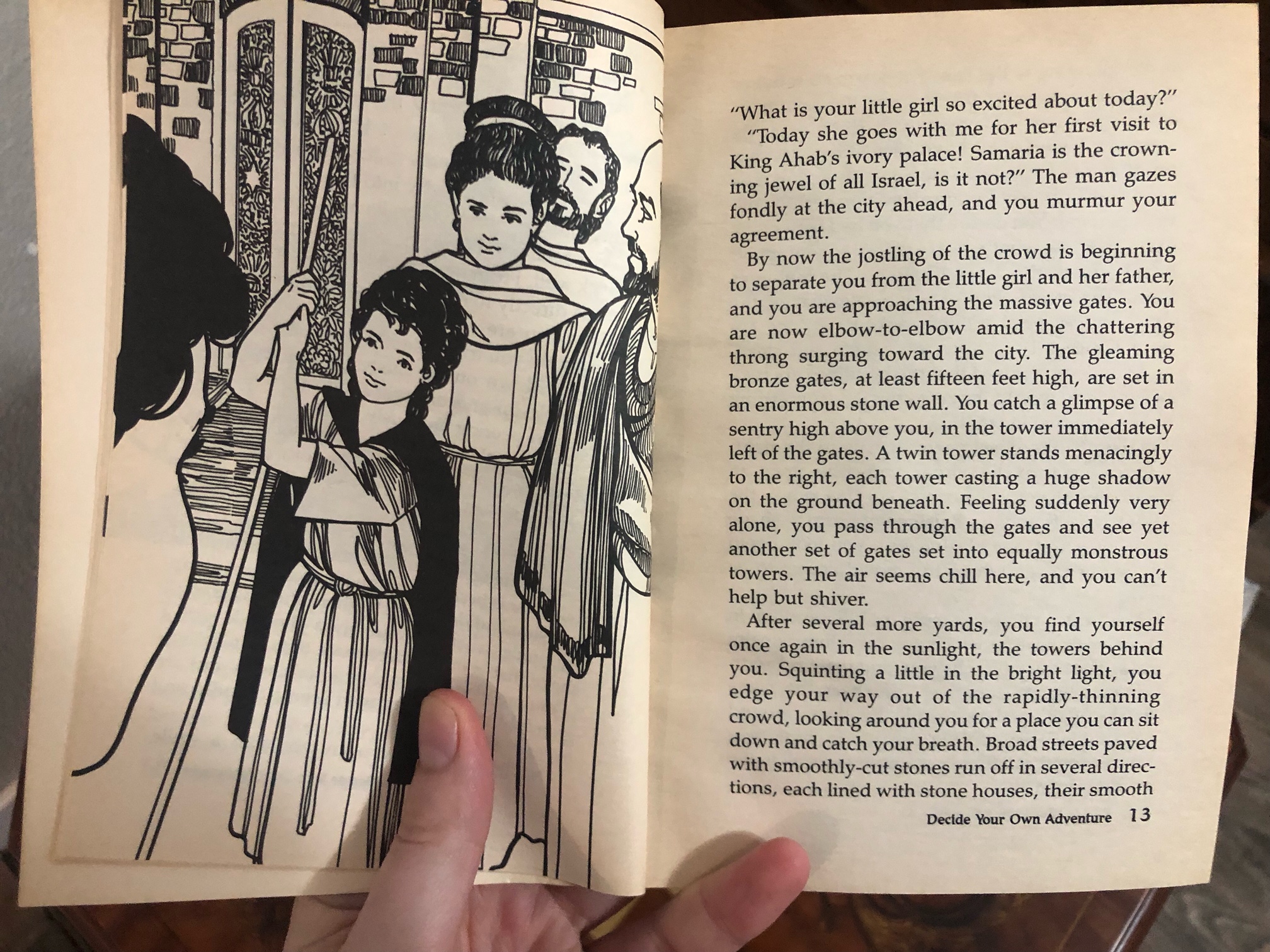
I wasn’t as familiar with the story of Elijah, so I was pretty intrigued reading through this one, and shocked at some of the nasty things I got to witness in a juvenile fiction book. The first stop at the temple of Baal is memorably frightening, with the throngs shrieking and flailing like lunatics and the priest frothing at the mouth as he cuts himself with a ritual dagger before preparing to gut an infant at the altar. By that point our nameless protagonist said, “NOPE!” and skedaddled, and I don’t blame him.

You get to sit in on some interesting conversations at times, too. I like the idea that the city has become so caught up in Baal-fever that they consider the Hebrew God unfashionable and passe. In one scene I expected the Baal priest to have a hate on for the Hebrews, and his Hebrew wife to stick up for her people, so it was refreshing to see the opposite: the priest admitting the Hebrew God used to wield some impressive power back in the day, and the wife being embarrassed by her heritage. They even mention that the Hebrew laws are considered archaic, and one would have prevented them from getting married at all, so at times you see things from the Baal worshipers’ perspective and it kind of makes sense.
Then you remember they’re also lunatics who kill babies and stuff.
But there are a lot of moments where you make a choice thinking you’ll get to hear or see interesting things, only to miss out at the last minute and have to take a detour to another area. The times you actually get to see stuff happen is usually pretty atmospheric and intriguing, so these segments were always a huge letdown. Don’t tease me with a showdown between the underdog of Israel and the evil despots destroying it if you aren’t gonna deliver, Susan E. Hilliard! Even when you finally get to see Elijah and Ahab confront each other, it’s anticlimactic.
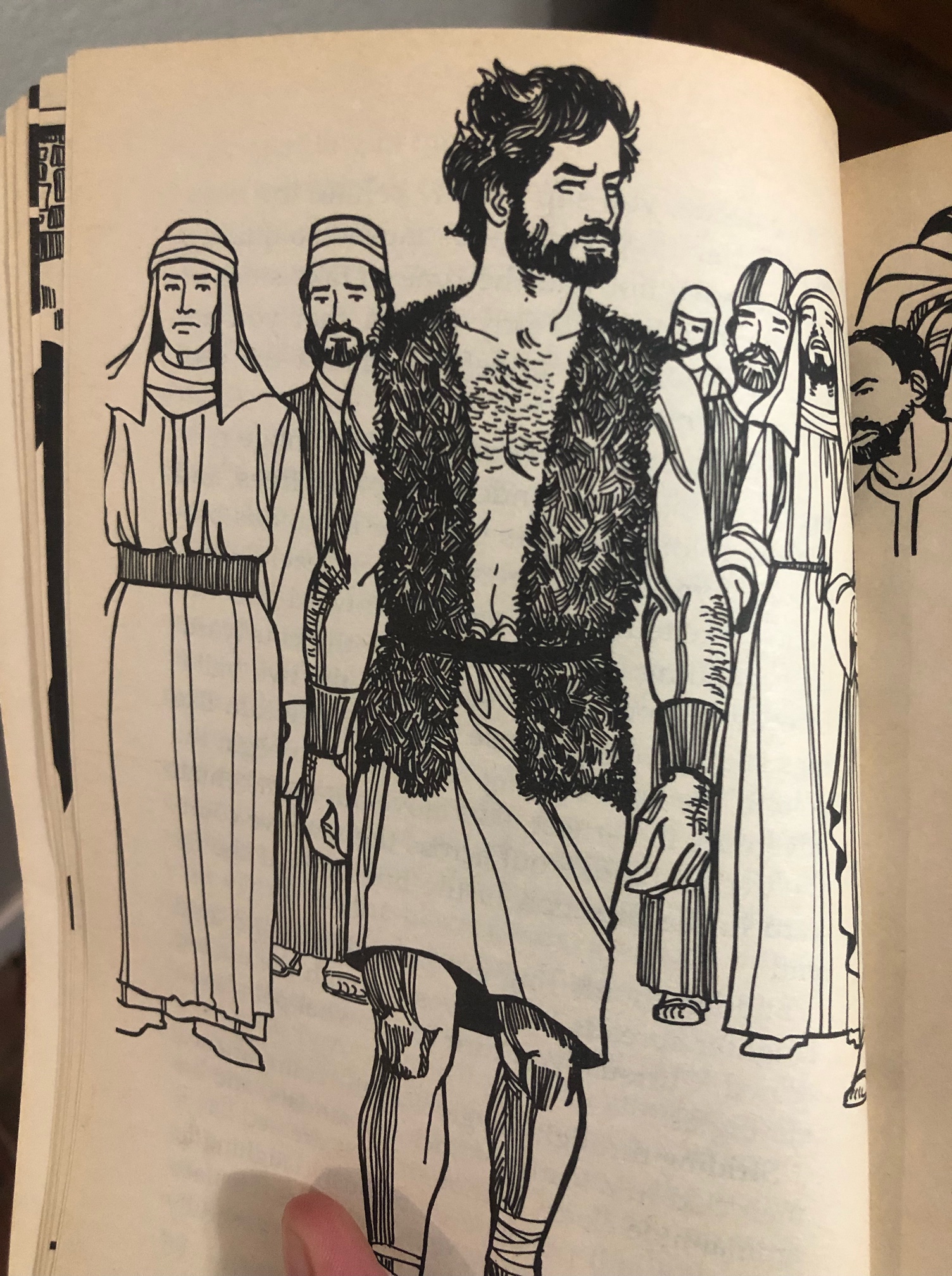
Elijah’s introduction is a sight to behold, too, as he struts up to King Ahab’s palace looking like Charleton Heston ready to bust some heads. I kinda want a t-shirt with this guy on it. The artwork by Ned O. is as cool as ever, with clean linework and good characterization. Elijah always looks like a no-quarter-given hero, and Queen Jezebel comes off like the kind of wicked witch only a modern feminist news site would name itself after. Hilliard does a great job introducing the evil queen, too, and it’s no wonder people feared and worshiped this woman. Wish she’d had more “screen time” in the book.

I enjoyed this one more than The Dreamer, thanks to the healthy dose of intrigue and the constant sense of doom. Sneaking around sacrificial temples and the chambers of execution-happy royal despots was pretty fun, and gave a sense of danger you probably don’t get in a lot of volumes in this series. Even when you’re having a pleasant dinner with people, you feel like they might turn on you at any moment. And you really begin the story thinking “aw, these Baal priests can’t be so bad that they all needed to be executed,” and then the more you get to know them, the more you realize why they had to go.
“One true god” arguments aside, baby killin’ and cult mentalities ain’t good for any society.

If you fancy yourself a Bible-themed book and haven’t read this series before, this wouldn’t be a bad start. Even though you’re an observer in all these books and don’t affect the outcome, you feel a real sense of peril in Jezebel’s backyard, and the grisly cult rituals of Baal raise the stakes quite a bit. And you have to admit, the question of whether a mass-execution is justified or not is a great hook.
Time for bed. Uncle Mac out.

 Uncle Mac's Gamebook Shack