Mario thinks of the time Bowser tried to carry the kingdom’s doorknobs away in a hot air balloon.
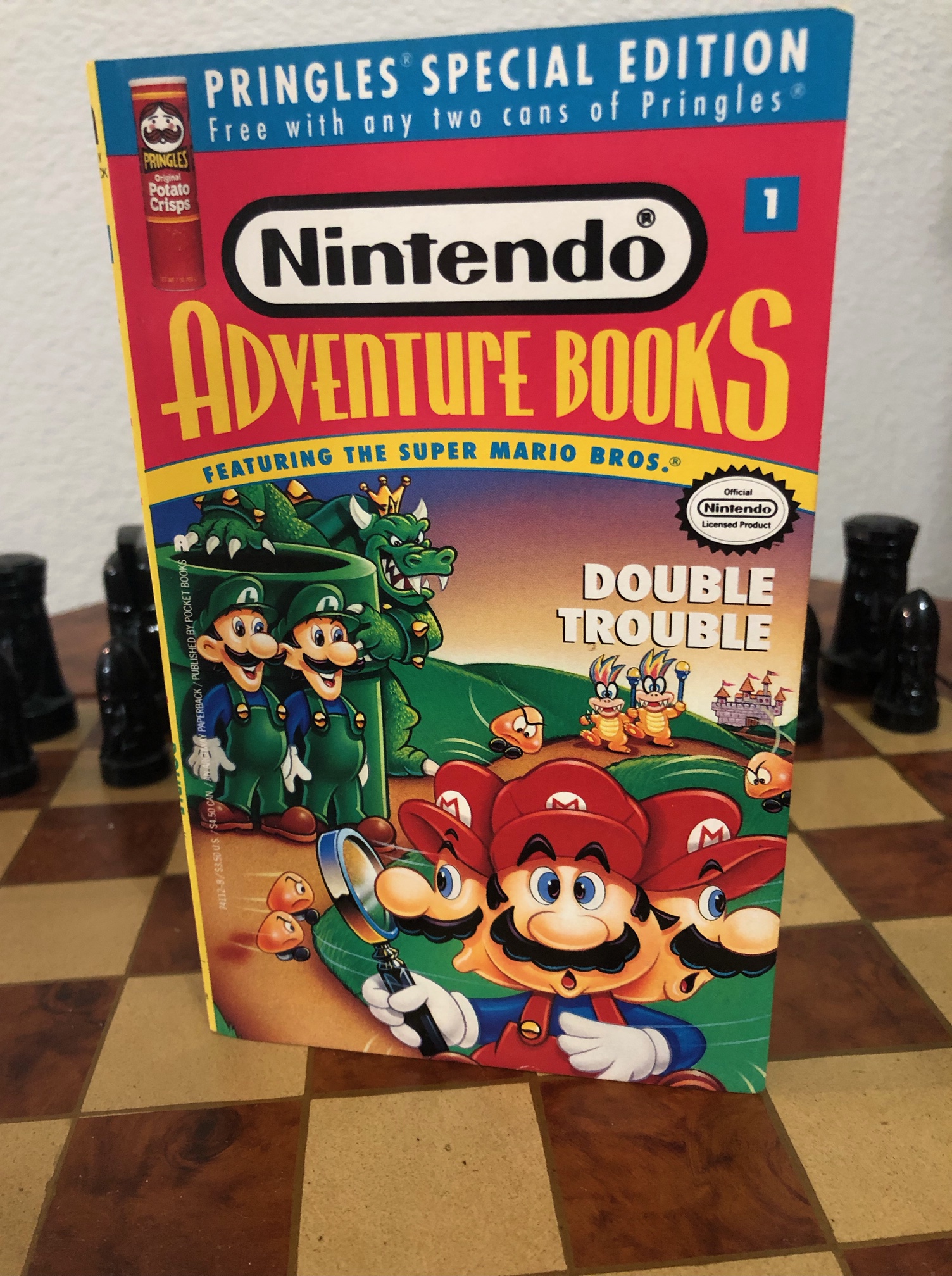
Double Trouble opens with Mario’s Rube Goldberg alarm clock literally knocking him out of bed, followed by a garbled distress call from Princess Toadstool (I’ll explain why I distinguish her from Princess Peach in a moment). Mario can’t tell what’s wrong, so he decides to get Luigi and jump into action…but Luigi is missing from his bed. And when he does find Luigi, he’s acting very strangely…
My second favorite gamebook series as a kid was the Super Mario adventure books series, and reading them now as an adult (and as an author), I can understand the reasons why.

For one, they were based on the Valiant Comics Super Mario universe, which I grew up reading with relish. Those comics were hysterical, and felt like a Nintendo-endorsed version of the Carol Burnett Show: each issue contained short comedic adventures (like Koopa using flying carpet juice on the Toadstool carpets in a bonkers kidnapping plot), a few skits (a tour of the Historical Museum of Plumbing, or a documentary about Koopa’s family tree), a joke advertisement or two (Koopa Kola Klassic, or Koopatone sunscreen), and advice column letters answered by a shamelessly disinterested Princess Toadstool.
For another, this is one of those gamebook series for young readers where the author used the gamebook format to tell a fun story, rather than simply banking on the gamebook format to keep the reader invested. The story of Double Trouble is actually entertaining for Mario fans, draws heavily on the source material, and includes gags, one-liners, and groaners you’d expect to find in a Three Stooges short.
A few chapters in, I was reminded of how much more engaging the narrative is than many of the other gamebooks-for-young-readers I’ve covered so far. The story unfolds at a natural pace: we’re not given the main plot contrivance within the first two chapters. Author Clyde Bosco builds up to the reveal of the crisis at hand, and even if you know what’s coming, it’s a fun ride.
And here’s a great example of how Bosco builds up to something in this book. At one point Mario detects what feels like a small earthquake, only to realize the ground is shaking from the footsteps of the approaching Boomerang Brothers, a pair of gigantic twin turtles who are armed to the teeth with Australian bonkery. Then we get this passage:
The last time Mario tangled with the Boomerang Brothers, he broke a tooth and ripped his best pair of red overalls. And that time, Luigi was there to help him.
The Which Way books probably would have settled for a few adjectives to build up how bad these monsters are. Double Trouble gives us an anecdote that immediately makes us not want to face off with the twin turtles.

Every few chapters you’ll be faced with a puzzle or game. Most of these games are pretty basic, and fail to be the highlight of Double Trouble and its successors, although occasionally they slip in a pretty clever one. More than half the puzzles just give you warnings about what’s coming before you go to the next chapter. These would have been much more effective if the warning helped you make the right decision in a later chapter, which is only sometimes the case, not always.
This was also the first gamebook I read that gave me an inventory. Mario collects coins and treasures throughout the adventure. The treasures affect the outcome of specific chapters, while the coins are mainly used to tally your score for the path you took to the final chapter, giving a little incentive to try again.

There are clever uses of branching paths regarding these items too. As an example (spoiler alert), in the beginning Mario randomly chooses one of four treasures, including a magnifying glass. When he arrives at the castle, he discovers a magnifying glass would have been helpful, but not to worry, Toad has one….except Toad is missing, and now Mario has to go on a side-quest to get a magnifying glass from a beperiled Toad! If he succeeds, he takes a detour to the path he would have already taken if he’d had the magnifying glass in the first place. Good stuff.
Obviously this is a book for younger readers, so older readers who are used to more fleshed-out stories will have a harder time getting into it. Although that’s the disclaimer for most of the books I review on this blog. Even so, it’s easy to enjoy it for what it is. You’re not going to find Shakespeare hiding within a goofy yarn about talking toadstools, despotic turtles, a flying plumber, and the color grorange.
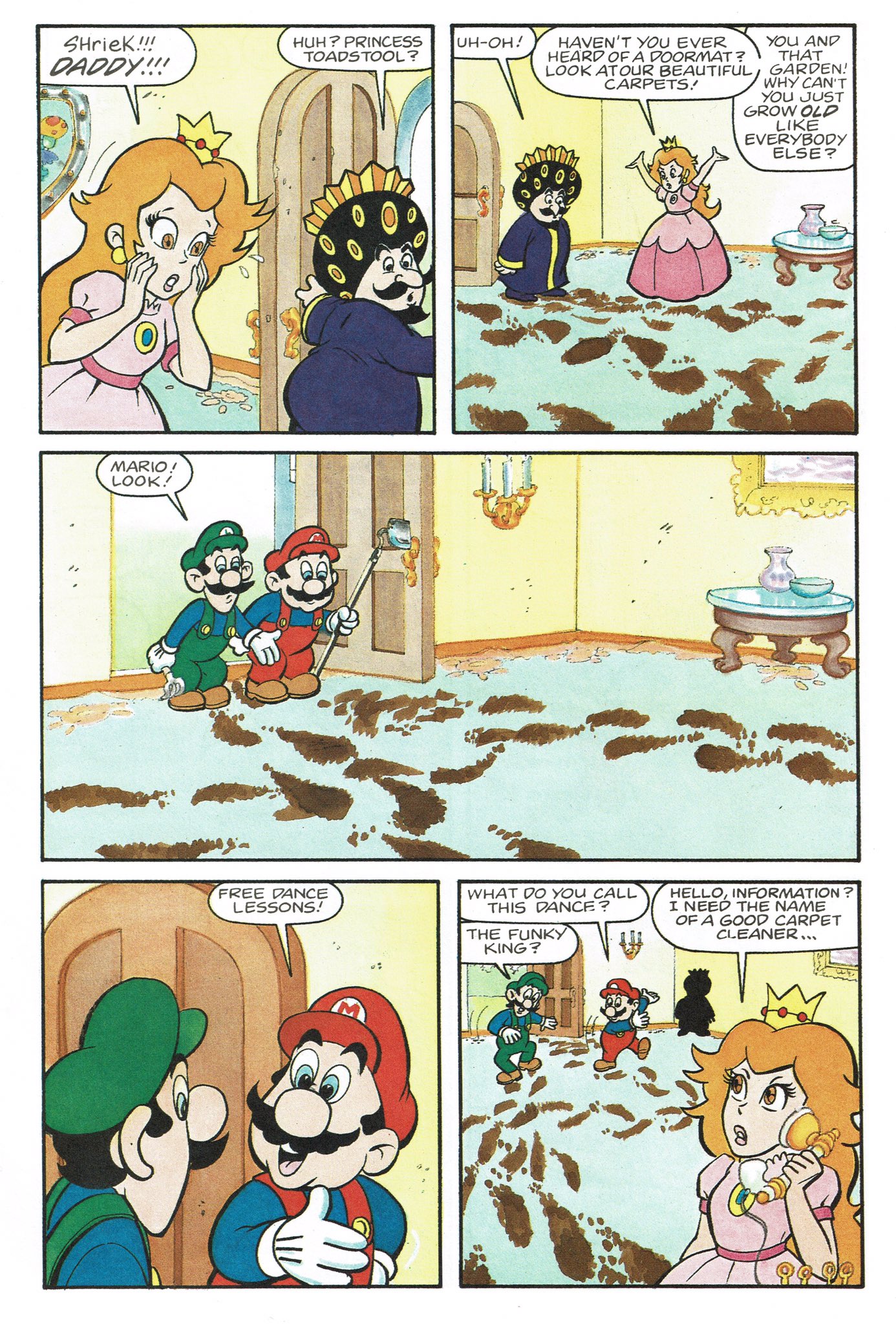
As a side-note, another thing I loved about the Valiant Mario universe was Princess Toadstool, whom I have distinguished from Princess Peach. Peach is a ditzy, sugary sweet piece of furniture who needs rescuing on a regular basis and bursts into fountains of tears at the drop of a hat. Valiant’s Princess Toadstool, by contrast, had personality. She was a good guy, but she was also a princess, which means she was a diplomat accustomed to getting what she wants, when she wants it. Always pampered, and sometimes out-of-touch altogether. In the second gamebook she comes home to find the castle ransacked, and goes on a two-paragraph-long rant about the disgraceful state her stuff has been left in, before finally realizing that her father is missing. In one episode of the comics, she sends Mario on a perilous mission to Water Land, to face electric jellyfish and man-eating trout and God knows what else. His objective? Gather a handful of chuckberries for her cereal, because the castle’s stock has run out, and she always has chuckberries on her cereal. Cereal without chuckberries just won’t do. I am mandating this a national emergency. Run along now. That’s an order.
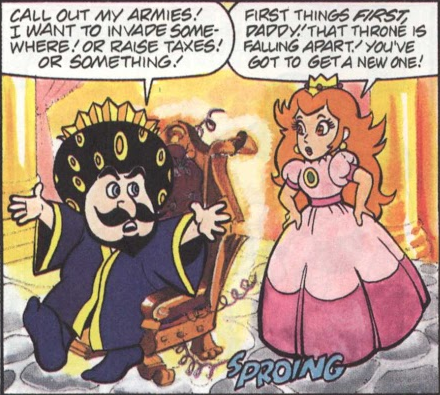
In short, it’s very clear why she and Mario are “just friends.” As the old saying goes, if her Starbucks order takes longer to say than it does to make, she’s too high maintenance.
Nintendo Adventure Books were the standard I used when designing the Dinah-Mite book series: using the gamebook format to tell a fun story with interesting characters, and a liberal use of puzzles and inventory items so that all the paths aren’t decided by a binary choice. I just took the format they started and fleshed it out further. Double Trouble is a great start for this series, and I highly recommend it to Super Mario fans and gamebook collectors.
Time for bed. Uncle Mac out.
Addendum: Just learned from a fascinating article that Clyde Bosco was one of many pseudonyms for Russell Ginns, author of Samantha Spinner and other books and games!
 Uncle Mac's Gamebook Shack