The old man screams at you, “May Fate never smile on you again.”
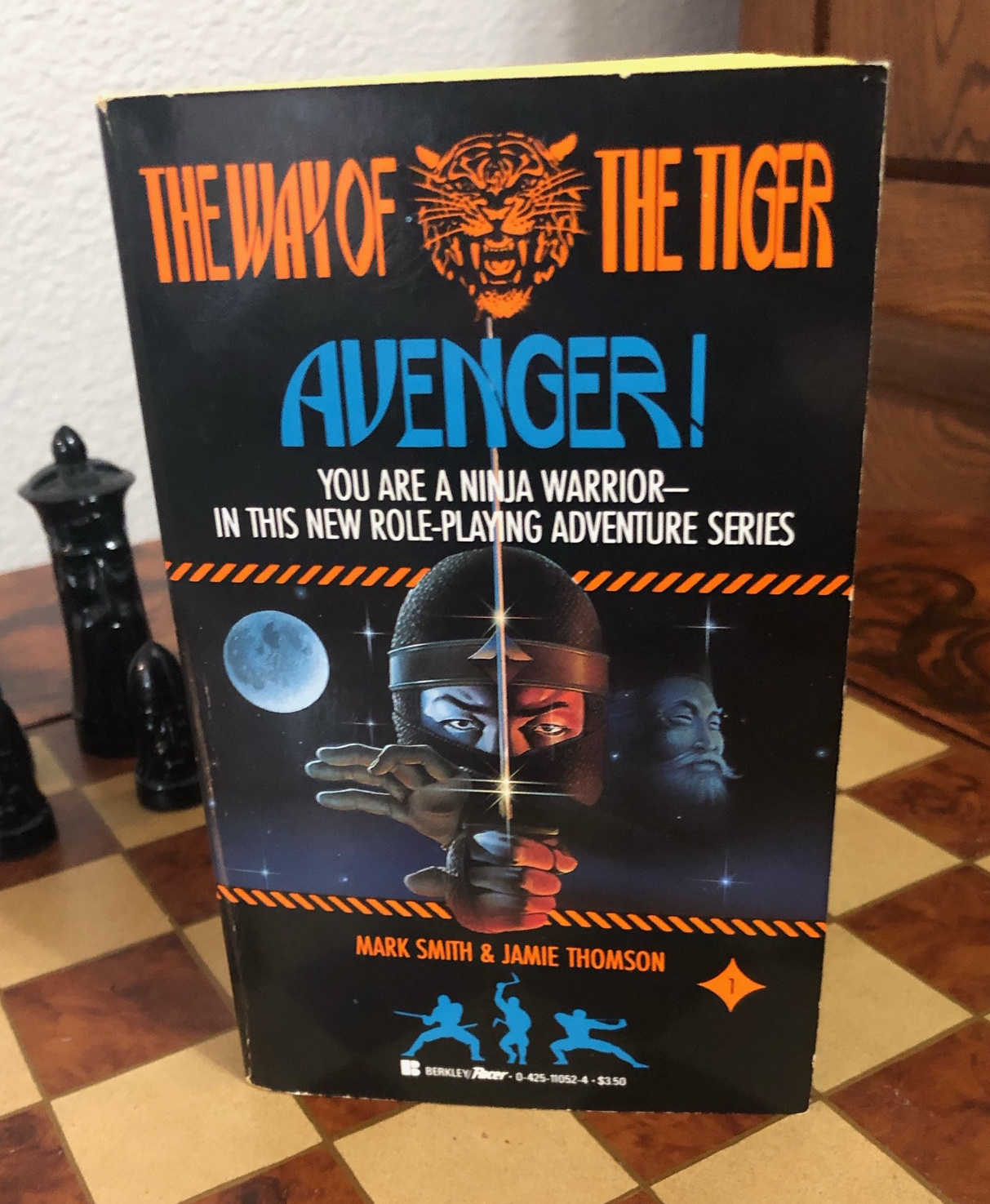
Avenger! leaves me with mixed feelings on the Way of the Tiger series so far. I prefer not to go into super-detail on gamebooks so I can give general impressions without outright spoiling everything, especially with these solo RPG style books which are much more involved than, say, a 90 page Twistaplot.
Way of the Tiger is set on a world called Orb, which, long story short, is Generic Dungeons and Dragons Land. Take everything you can think of from a typical tabletop RPG setting and throw it into a blender, and Orb is the resulting smoothie you get. Your mileage may vary with this, especially with a book that touts itself as a ninja adventure.

You are undoubtedly a tough-as-nails ninja with cool ninja abilities, on a quest to kill a bad dude and avenge your murdered master. You’re a master martial artist yourself, and you get all kinds of ninja gear that may come into play at some point (shurikens, poison, etc). This is what drew me to the series because it seemed like a refreshing change from the usual medieval fantasy setting you get with gamebooks. The fact that the adventure isn’t strictly set in an Asian environment–like Sengoku Era Japan, for instance– is one of the big minuses for me. Way of the Tiger sets out to have a cool ninja adventure while simultaneously wanting to set that adventure on another world where anything can happen, and I can’t help feeling like it would have been better to just pick one or the other. Give us a cool secret agent adventure on a fleshed out Burroughs-style alien world, or give us a ninja adventure on earth.
Even then, Orb as a setting has no identity of its own, preferring to just mix all the tropes in a blender without trying to make them really feel cohesive. It’s literally a dramatization of somebody’s D&D setting, where a ninja can casually cross paths with creatures from Forgotten Realms like dark elves and regenerative trolls. Maybe Orb comes into its own as a setting in later installments, but in this first installment, it’s not very memorable. And maybe there are details of the setting I’m missing that avid WotT fans can illuminate for me.
Not to say that the adventure isn’t cool. There are many different paths to take, and you’ll run into all kinds of perils: joining an evil army to gather intel, fighting in a game show style arena, battling pirates: the book never gets boring.

This is a combat-heavy adventure, too, and within the first few pages you’ll find a handy diagram of all the sweet ninja moves you can use in a fight. At first I thought this was just window dressing, but it turns out when you fight an ice giant with legs as thick as trees, you may want to think twice about using the Dragon’s Tail Throw on him, and opt for an Iron Fist Punch to the groin instead. And while the Forked Lightning Kick can do extra damage to him, the fact that you’re fighting him on solid ice means you have to make a Fate roll to keep from slipping and spoiling the attack altogether.
So there’s a lot more to fighting than just dice rolls, which is a fantastic touch that actually makes the combat fun.
Also Fate rolls involve the fickle goddess Fate, who may give you good luck or bad luck depending what mood she’s in that day. (Another setting nitpick: the goddess of luck and fate is simply named Fate.)
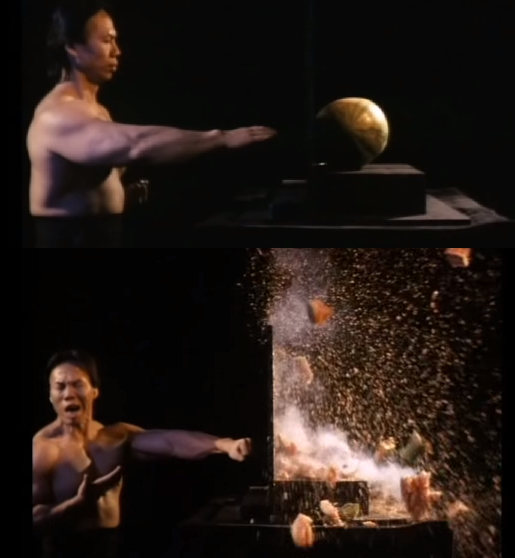
You can also choose to block an enemy attack in most cases and reduce damage; and sparingly use your Inner Force to enhance your abilities, like punching harmlessly through solid objects to make watermelons explode on the other side.
You also get a selection of skills to choose from, from Climbing to Escape Artist to Playing Possum. Some of these skills are more useful than others, but there are times during your adventure when one of these skills can really make your job easier and keep you out of unnecessary trouble. I took Escapologist because I knew, I just knew that I would be taken prisoner at some point in my quest, and lo and behold…! I didn’t take Feign Death, because what are the odds I would need a skill that obscure and specific?
(Runs into un-killable troll.)
Oh…
The writing is usually on the dry side, very straightforward and sometimes even sloppily worded. This is fine, except when they try to use the Mysterious Orient ™ writing style, especially in the early chapters. In trying to make the revenge plot seem poetic and honor-bound and ninja-esque, it becomes a chore to read and even eye-rolling at times.
Your dream of Glaivas, for it was he you saw astride the deck of the ship which now rides at anchor near the sands, has convinced you that you are destined for this quest…
Maybe the biggest issue with the writing is they didn’t proofread and edit enough. Either that or they were trying to make it read like the dub in a chop socky movie.
Reading solo RPG format gamebooks is tough for me as it is because of how involved they can get, not unlike settling in for a lengthy Elder Scrolls binge: they’re not something you just pick up and play on a whim. Adding a narrative style that is both dense and unpolished made it even harder for me to get through a session of this book. Other readers probably won’t even notice the writing and just roll with it.


The artwork is stellar though, right out of a silver age comic book. I love the pic of the monk kicking a shar pei man in the breadbasket.
In summary: ninjers are cool, great combat system, fantastic artwork, lots of forking paths; but under-baked setting and dense, unpolished writing style. Despite its faults, I definitely recommend this book for people who like Fighting Fantasy and its cousins. The combat doesn’t feel as unfair as Cretan Chronicles and the options you have in each fight make it a lot more cerebral and interesting.
 Uncle Mac's Gamebook Shack